Crosses:
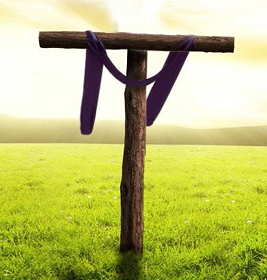
Who would want to wear a replica of what Cicero called the “most cruel
and disgusting penalty” around your neck or place it in the center of
your worship space?
Moreover, we know that Romans didn’t talk about crucifixion, at least
not in polite company. It was thought to be too barbaric to
bring up. The very word “cross” shouldn’t cross the thoughts or
lips of Roman citizens. This probably accounts for why there are
so few Greco-Roman sources on this subject.
This leaves the Gospels as our best source. Because their
audiences were all too familiar with crucifixion, however, they never
bother to describe the actual Cross or exactly how Jesus was placed on
it. But, they do provide clues in ways which scholars trust are
historically accurate.
Based on our limited non-Christian sources, here’s what we know.
In addition to the way it’s traditionally depicted, there were a
variety of “crosses”:
--An upright stake, where the hands of the crucified were raised
vertically and nailed above their head
--A scaffold type structure made up of vertical planks used for mass
crucifixions (Often, many people were crucified together at the same
time.)
--An X-shaped cross which placed its victim at an angle
--A tau, or T-shaped cross
NOTE: Crucifixion was invented by Darius, but adopted
by
The Roman Empire.
Furthermore, we know that the victim was often placed low enough that
animals could ravage their feet—roughly, only 30cm off the
ground. The crucified could be tied and/or nailed to the
cross. In some cases, one or both of two kinds of physical
support were provided: A foot rest near the bottom of the upright beam,
and/or a “seat” midway up. Demoniacally, this was designed to prolong
the torture—the victim could push themselves up to
catch their
breath and get a momentary break from the suffocating pressure
crucifixion placed on the chest cavity!
In most cases, however, it seems that criminals were affixed to a
crossbeam (with their arms stretched out and their wrists either tied
or nailed in place) and then hoisted onto a vertical post that was
permanently fixed in the ground. They would be lifted up using
forked poles, whereupon the crossbeam was inserted into a slot or notch
in the upright beam.
In 1968, a cadaver was unearthed in Jerusalem of a man in his twenties
who had been crucified decades prior to 70 AD—in other words, very
close to the time of Jesus. An iron nail remains impaled through
his foot. Based on its position, archaeologists believe that his
feet were straddled to either side of the upright beam and that two
nails were used, using a piece of olive wood on the outer edge to keep
him from pulling either foot free of the nail.
Adding the clues the Gospels provide to all this, we can safely say the
following things about Jesus’ Cross:
--Once the crossbeam was in place, the traditional depictions of the
Cross turn out to be fairly accurate (We are told Jesus was forced to
carry His cross, which means the crossbeam only, and that there was an
inscription above Him proclaiming His “crime”, which means the vertical
beam rose above His head)
--He was nailed—not tied—to the cross, likely with iron nails about 15
to 20 cm long (Luke 24:39 implies that His hands and feet had been
pierced by nails)
--The nails in His hands were actually placed through the wrists (John
20:25, 37 refer to the nail prints in His hands, but both the Hebrew
and
Greek words usually include the entire forearm; we know that the palm
could not have supported the weight of the body—the nail would rip the
fascia and muscle - so nails were driven through the wrist bone:
probably between the radius and ulna.)
--A common guess is that on the Cross Jesus was elevated to a height of
roughly 2 meters (Three Gospels talk about needing a reed or hyssop to
raise a sponge full of wine to Jesus’
lips, which
wouldn’t be necessary
if He was lower) - which is about right: the average man in those
days was 1.5 meters tall.
--Because He died so quickly, Jesus probably didn’t have either the
footrest or seat affixed to His cross (The scourging He received
beforehand certainly would have significantly hastened His death, but
because the Romans were seeking such expediency in His case—to avoid
the Sabbath—it would defeat their purpose to provide anything that
would prolong His life)
 This is what we can say with a fair amount of confidence. The
rest is conjecture. But what isn’t conjecture is the excruciating
death Jesus would have suffered. Looking at these details so
analytically might distract us from the horror of crucifixion.
But, what we can be absolutely certain of is that it was sheer
agony. And that He did it all for us—out of His tremendous love.
This is what we can say with a fair amount of confidence. The
rest is conjecture. But what isn’t conjecture is the excruciating
death Jesus would have suffered. Looking at these details so
analytically might distract us from the horror of crucifixion.
But, what we can be absolutely certain of is that it was sheer
agony. And that He did it all for us—out of His tremendous love.
Pictured to the right are 2 types of
crosses commonly
used by the Roman army
in Century 1 A.D. Each carried an inscription stating the
victim's capital offense and a seat-like projection, not designed for
the victim's comfort, but to prolong their agony. Nails and ropes held
the victim's legs and arms in place.
The cross on the left was called a “high tau” cross because it was
shaped like the capital Greek letter tau (“T”). The cross on
the right was an actual tree still in the ground (dead or alive) with
its limbs serving as the cross bar. Jesus was probably crucified on a
“low tau” type cross.
And to complicate the cross even more... these are the common styles of ornaments SYMBOLIZING the cross - found in the era:

Yeshua (Jesus) was most likely crucified on the Saltire cross - which
is an "X", as was Andrew:


but he may have been on a Toa ("T" in Greek) cross, not the "t"that
most everyone wears around their neck, and is on most all Churches.
I prefer to wear a symbol of the resurrection - the powerful,
"nobody else could do this!" and "He lives!!" - not the death. However, I don't wear any images:
Cross, images
The cross is a symbol that tammuz used centuries before birth of
Messiah. Constantine the pagan saw a symbol and everyone forgot GODs
Law: No symbols or images.
(Exodus 20:4; Deuteronomy 5:8).
https://en.wikipedia.org/wiki/Tau_cross
If this is true, however, God is not God; if He forbids all images, He
has broken His own law multiple times and is therefore unworthy of
worship. (see "inconsistencies/contradictions in The Bible")
In Exodus 25:17-22, God commands Moses to fashion an image of
cherubim,
angelic beings who inhabit "heaven above," to adorn the top of the
Mercy Seat. Yet, commandment 2 flatly disallows such a
creative work - unless it does not forbid the creation of all images.
Remember, Exodus 20:5 ... "you shall not bow down to them nor
serve them."
God's very creation glistens with light and beauty and complexity. The
animals and plants that cover the earth are marvels of design, color,
function, and imagination. From the tiny amoeba to the enormous blue
whale, God's creative genius is unmistakable in every detail.
God would deny His nature and His purpose by forbidding human artistry,
invention, or even something as mundane as snapping photos of family
and friends in the second commandment. Alone, then, Exodus 20:4 lacks
the element of purpose for the forbidden image, which verse 5 provides:
to be used as objects of worship. The complete thought reads,
paraphrased, "Do not create images of anything for the purpose of
venerating or serving them as rival gods."
We are free to create images of all the things we see - and even those we
dream up in our flights of fancy. We cross God's line only when we use
such images in worship and betray our vow of exclusive devotion to Him.
The Cross:
Two of the forms of the pre-Christian cross which are perhaps most
frequently met with are the tau cross, so named from its resemblance to
the Greek capital letter T, and the svastika or fylfot, also called
"Gammadion" owing to its form being that of four Greek capital letters
gamma G placed together. The tau cross is a common Egyptian device, and
is indeed often called the Egyptian cross.
Variations of the tau cross were used extensively by nominal Christians
in Egypt. "The ancient Egyptian hieroglyphic symbol of life—the ankh, a
tau cross surmounted by a loop and known as crux ansata—was adopted and
extensively used on Coptic Christian monuments." (The New Encyclopedia
Britannica, 15th ed., 1995, Vol. 3, p. 753). The tau form of the cross
had been used as a pagan Egyptian symbol and then adopted by
"Christians," called Copts, in Egypt. (A Copt is a member of the
traditional Monophysite Christian Church originating and centering in
Egypt. A Monophysite is one who adheres to a variation of Gnosticism
that teaches that Christ is altogether divine and not human, even
though He took on an earthly body.)
Tammuz and the Cross
First: the definition:
Dumuzid or Dumuzi or Tammuz, known to the Sumerians as "Dumuzid the
Shepherd" and to the Canaanites as "Adon", is ancient Mesopotamian and
associated with agriculture and shepherds, who was also the first and
primary consort of the goddess "Inanna".
Where did the tau cross come from? In the book of Ezekiel, God
supernaturally revealed to the prophet some of the secret sins of the
nation of Israel. One of these sins was lamenting for a pagan god named
Tammuz. "So He brought me to the door of the north gate of the LORD'S
house; and to my dismay, women were sitting there weeping for Tammuz"
(Ezekiel 8:14). Who was Tammuz and why would women be weeping for him?
The New Encyclopedia Britannica writes in the article "Tammuz": ". . .
in Mesopotamian religion, god of fertility embodying the powers for new
life in nature in the spring" (Vol. 11, p. 532).
This "nature god" was associated with 2 yearly festivals, one held in late winter and the other in early spring.
https://en.wikipedia.org/wiki/Dumuzid