Added Verses / Hidden Verses / "The Missing Verses"
Added Verses (yes, MANY of the verses that you cling to - were added!!) Within the NIV, you will discover there are at least 16 “missing” verses when compared to the KJV. This is intentional, and si because they wanted to be correct, since the KJV is false teaching by adding, and not notating that the Textus Receptus did not agree. If you want to look for yourself, here are some of those “missing” verses:
MANY more below, but first...
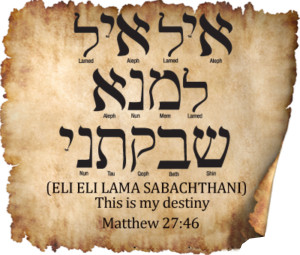
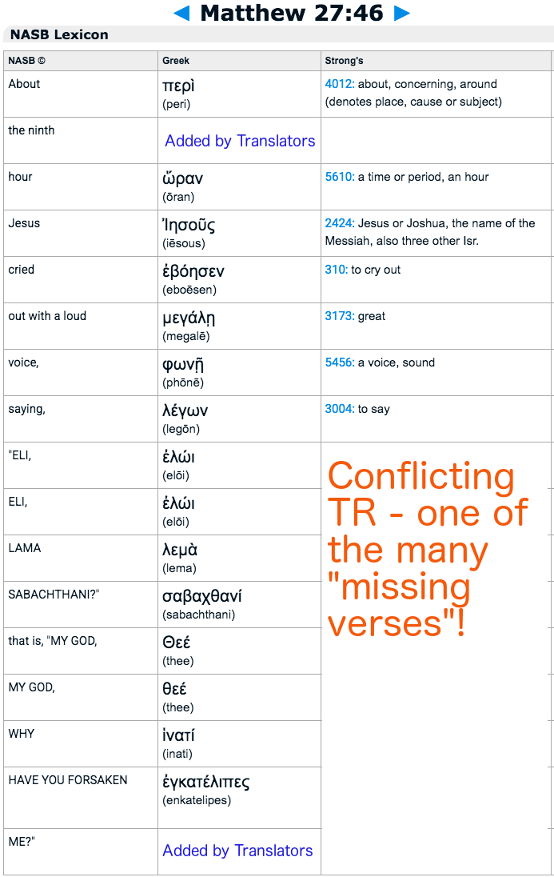
- Matthew 27:46
The original Aramaic:
The Greek translation:
"The King of the Jews" is a MISSING VERSE.
Luke 23:38
Matthew 27:37
Mark 15:26
John 19:19
ALL are conflicting TR (!!!!!) We do not know what was said, since all 4 accounts are different.
- Matthew 23:14, Matthew 17:21, Matthew 21:33, Matthew 12:40, Matthew 18:11 (this verse has NOTHING!! ALL of the KJV has been ADDED - from nothing!!)
Nor is "99" in Matthew 18:12), Matthew 4:4, Matthew 4:10, Matthew 7:13, Matthew 13:14 - Part 2, then ALL of Matthew 13:15 AND Matthew 13:16.
- Matthew 11:29 - "the "and you will find rest for your soul" is all "conflicting TR"!
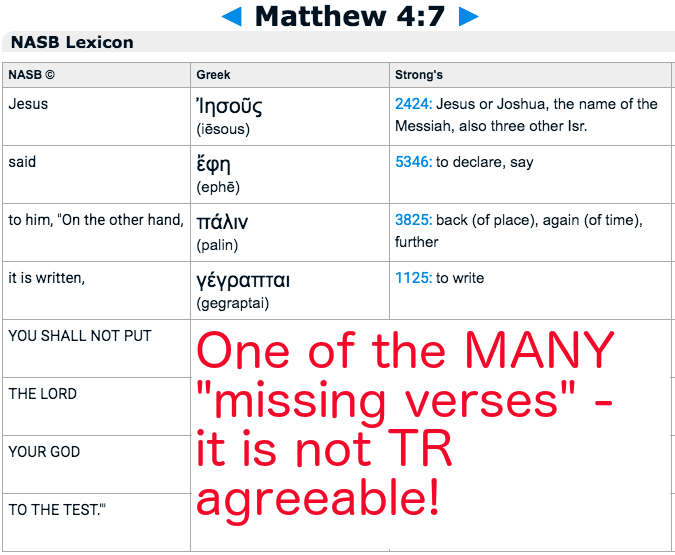
- Matthew 4:7 ("You shall not put the Lord your God to the test / do not test God")
Matthew 15:8
"These people honor Me with their lips, but their hearts are far from Me."
Matthew 15:9
"But in vain do they worship me, teaching as doctrines the precepts of men"
Matthew 15:4
Matthew 7:13
??
Luke 4:4
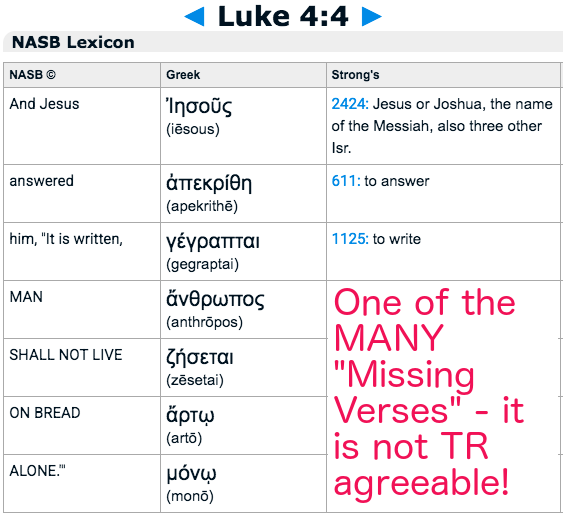
Also, "but by every word from the mouth of God" was also added by Translators.
Luke 4:8

1 Samuel 7:3
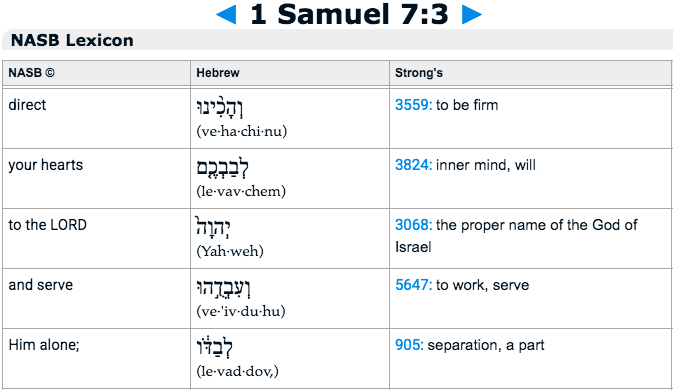
NOTE: "Him" is not there, "heart" is actually "inner will", and "alone" is "separation/a part".
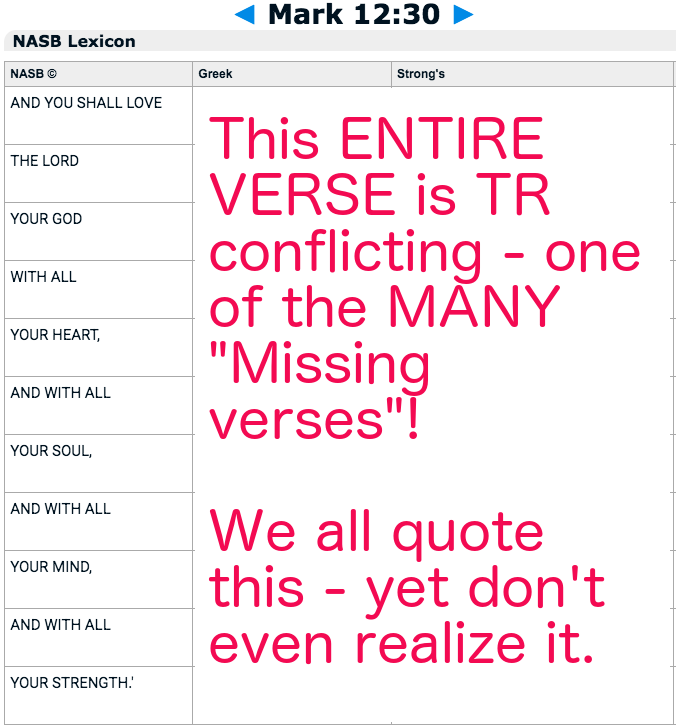
Mark 12:30 and Mark 12:31
"Love thy neighbor as thine self" (love your neighbor as yourself)
(Love [agapé - with church love] other people as yourself), however, that part is one of the many "missing verses".
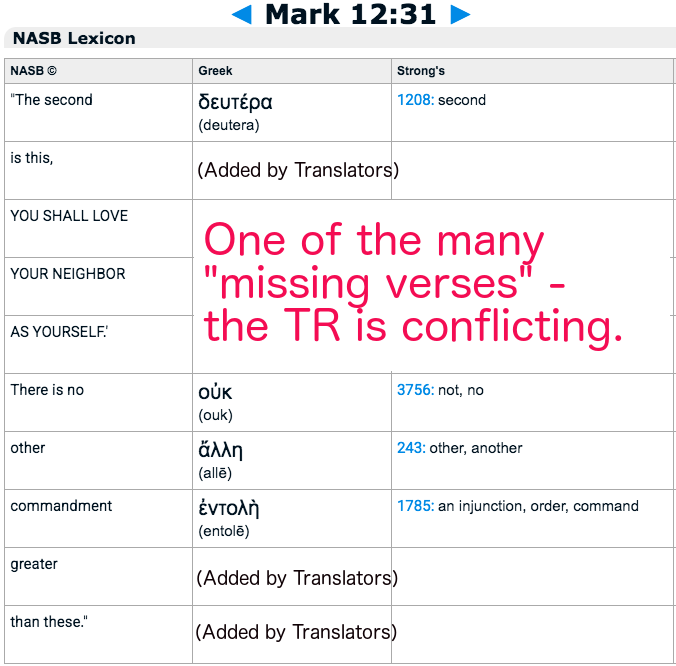
And the verse right before this one - the ENTIRE VERSE is TR conflicting!
Mark 12:30
Mark 7:6
(KJV) "He answered and said unto them, Well hath Esaias prophesied of you hypocrites, as it is written, This people honoureth me with their lips, but their heart is far from me."
NOTE: This one starts "the special verses", since after "it is written", the original text all _conflicts_ . But first, the non-conflicting text states:
The Greek: καλῶς Ἠσαΐας ἐπροφήτευσεν ὑποκριτῶν γ́γέγραπται
-- This literally/correctly translates to: "good/beautiful/noble/excellent/honorable ēsaias ("Isaih") to forth-tell (state history, _not_ "predict the future") a judging under/a performer acting under a mask/a two-faced person to write/describe"
-- Again, the rest of this verse cannot be known, since all source text _contradicts_ :
"This people honoureth me with their lips, but their heart is far from me."
Mark 7:7
(KJV) "Howbeit in vain do they worship me, teaching for doctrines the commandments of men."
-- Again, this *entire* verse cannot be known, since all source text _contradicts_ !!
Yet Christians "believe _every word_ . This is "The Word of man", _not_ "The Word of God", since the Translators guessed.
NOTE: The oldest known Gospel according to Mark (The Gospel of Mark) ends at Mark 16:8. Everything from Mark 16:9-20 [the end] are only found in more recent manuscripts. Most Christians believe what they are TOLD, not what they study.
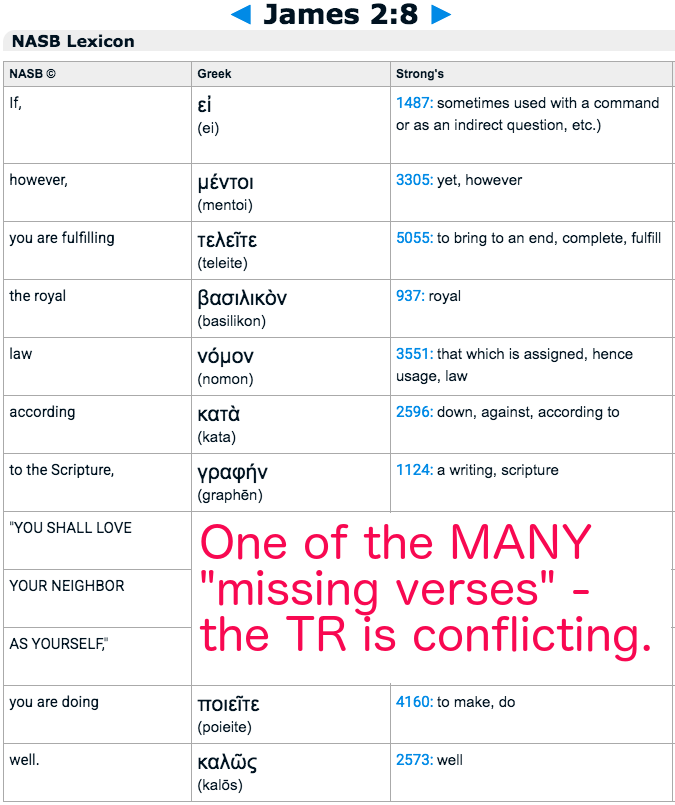
James 2:8
(This is yet another of the "missing verses"):
"Love thy neighbour as thyself" is not confirmed, as it has conflicting TR sources!
The original Greek states: Ἀγαπήσεις πλησίον σεαυτόν
Meaning: "love with Church love near/by extension: a fellow countryman, Christian or friend of you (seautoú - relating to one's self)"
The original Greek is: Εἰ μέντοι νόμον τελεῖτε βασιλικὸν κατὰ τὴν γραφήν Ἀγαπήσεις τὸν πλησίον σου ὡς σεαυτόν, καλῶς ποιεῖτε
This LITERALLY means: "if indeed law you keep/finish royal king/nobleman/royal according to the a writing love (church love) the nearby/close your as to yourself well do"
IN CONTEXT, it means "If you do keep God's law as in the writings, love with church love those near you as yourself, and you will be doing well."
People "cherry-pick" that "Love thy neighbour as thyself" only.
- HALF of Hebrews!!
- Most ALL of 1 Chronicles 12
- John 5:4 (this verse has NOTHING!! ALL of the KJV has been ADDED - from nothing!!)
John 5:5
Also, the end of Matthew 5:3: "waiting for the moving of the waters" - is not even there. Yep - added by Translators. But that Greek literally translates to: "Content/fulfilled the to mourn/lament to call to or for/to exhort/to encourage"
Matthew 5:4
μακάριοι οἱ πενθοῦντες πενθοῦντες παρακληθήσονται
Matthew 18:11

John 5:3 and John 5:4


- Mark 7:16, Mark 9:44, Mark 9:46, Mark 11:26, Mark 15:28, Mark 1:2 (EVERYTHING after "Isaiah the Prophet" is not agreeing from the TR.), Mark 1:3 (THE ENTIRE VERSE!)
Mark 7:16 (a MISSING VERSE - it was ALL ADDED!)
"If anyone has ears to hear, let him hear" - not even in the original!!
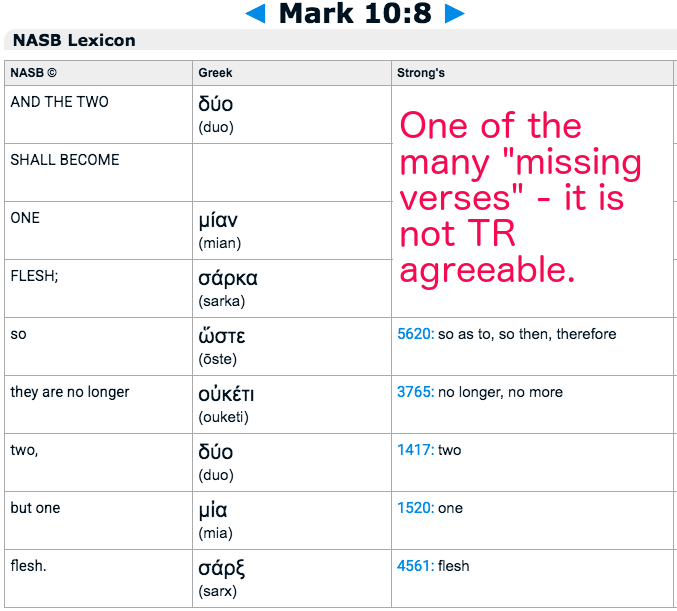
- Mark 10:8 "And they twain shall be one flesh: so then they are no more twain, but one flesh.” "and the 2 shall become one flesh" is CONFLICTING TR. Also, even _if_ the Greek chosen words _are_ correct, the "shall become" was added!
Mark 10:8
- Hebrews 1:5, Hebrews 1:6 (HALF of each verse is missing); Hebrews 1:7-13 (ALL are from conflicting TR!); Hebrews 8:8-12 (see below)
- Revelation 3:7, Revelation 3:14, Revelation 3:15-16 is that "cold nor hot” verse.
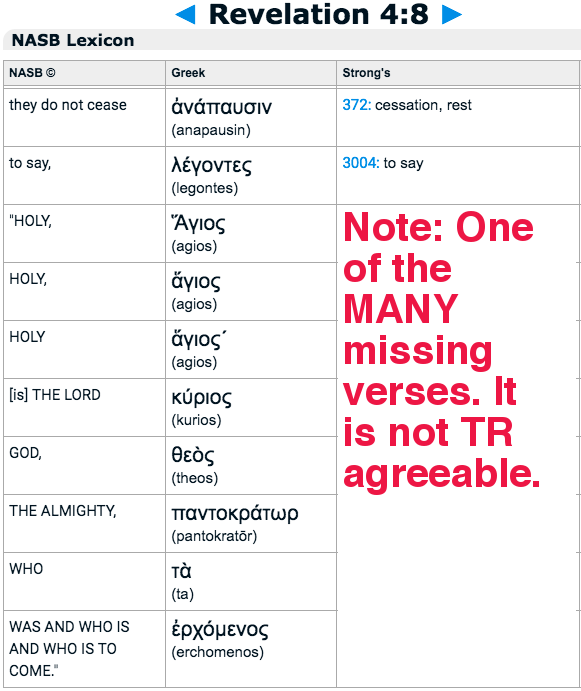
- Revelation 4:8 - God is holy: “HOLY, HOLY, HOLY is THE LORD GOD, THE ALMIGHTY, WHO WAS AND WHO IS AND WHO IS TO COME.”
- Revelation 1:7 - the entire opening "Behold, he cometh with clouds".
- Luke 17:36
- Daniel 5:25: "Mene Mene Nekel ..."
- 1 Samuel 21
- Acts 8:37 (and Acts 2:17-18, Acts 8:36-37. Verse 37 is absent in the NIV, but a notation is [correctly] added), Acts 15:34, Acts 24:7, Acts 28:29, Acts 13:22)
- Romans 16:24, Romans 2:6, ALL of Romans 10 (below)!! Romans 12:19 (See specifics below) and ALL of Romans 12:20 (below)!!
Acts 2:25 - Many "Christians" claim that the KJV (and others) are "false teaching" - because they removed "Holy Spirit". Well, it's NOT THERE!!! So, ALL versions are false teaching.
The original Greek:
λέγει
That's correct, _one word_ . All the rest was *conflicting TR". To continue, the entire verse states:
For David says of Him, ‘I SAW THE LORD CONTINUALLY BEFORE ME, BECAUSE HE IS AT MY RIGHT HAND, SO THAT I WILL NOT BE SHAKEN.
Now, you should know - _all_ instances of "David" - were _added by Translators_ . They *do not know* who wrote Psalms. it doesn't match David, or Solomon's handwriting, so it was either dictated to a scribe, or someone else wrote them. And since there are various handwriting, _who knows_ . Again, "For David says of Him," - was simply "legei" - which means "to say/speak" in Greek.
Now, the Greek that they used (chose/voted on) was:
κύριον διὰ ἐνώπιον δεξιῶν ἵνα σαλευθῶ
This literally translates directly to: "supremacy/supreme in authority/controller/master through/because of the right side (or hand) of a woman (yes, _of a woman_ !) in order that/so that to agitate/shake/disturb"
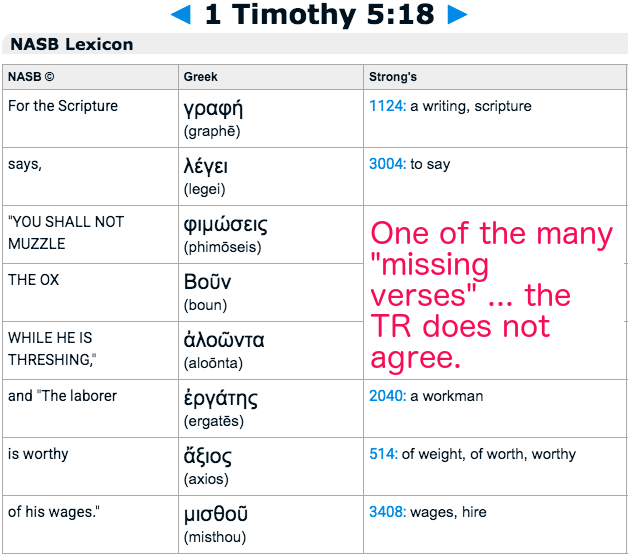
- 1 Timothy 5:18 - the "Do not muzzle an ox while it is treading out the grain,” or (KJV) "Thou shalt not muzzle the ox when he treadeth out the corn.” they were ADDED.
The Greek that the Translators chose - states:
φιμώσεις Βοῦν ἀλοῶντα ἐργάτης
This directly translates to: "to silence/to stop speech a cow/bull/ox to tread out grain a toiler/a teacher/worker" The rest - which _does_ agree with all copies of the TR - reads: ἄξιος μισθοῦ - meaning "deserving praise/deserving/suitable reward/payment for service"
- Mark 11:17 - "My house shall be called a house of prayer but you have made it a Den of Thieves". And "Temple" was not even there!
- John 2:17 - "Zeal for your house will consume me".
- John 12:13 - "blessed is he who comes in the name of the Lord" is one of the "missing verses" - one of *many* in the Bible - where the TR (Textus receptus) has many conflicting copies.
- John 5:4
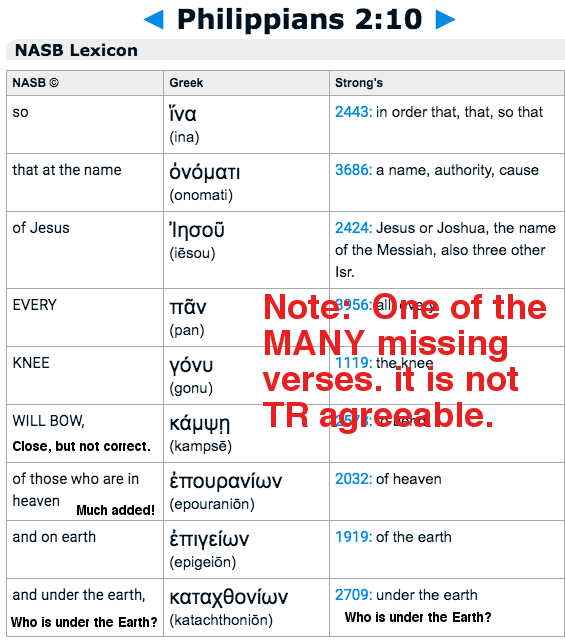
- Philippians 2:10
- 1 Corinthians 2:16 (the entire is: ἔχομεν νοῦν Χριστοῦ (meaning "To have mind/understanding The Messiah". ALL BEFORE IS MISSING, TR conflicting.
- and ... [drum roll] - one of the most quoted verses, yet it IS A MISSING VERSE!!
"For this cause shall a man leave his father and mother, and shall be joined unto his wife, and they two shall be one flesh."
1 Corinthians 15:27 - the entire beginning of this verse - is "Conflicting TR" - often called "The Missing Verses". But, after the "feet" part, the copies stopped conflicting, and are 5 Greek words.
-- A) the entire part 1 is one of the many "Missing Verses". I will put the *conflicting TR* in ALL CAPS - so you an see what was manipulated to suit [he]man's decision:
"FOR HE HAS PUT ALL THINGS IN SUBJECTION UNDER HIS FEET. But when He says, "All things are put in subjection," it is clear that this excludes the Father who put all things in subjection to Him."
-- The part what is not "conflicting" states 4 Greek words: πάντα ὑποτάξαντος δῆλον ἐκτὸς
This literally translates to: all/every to place or rank under/to obey obvious/clear/evident the exterior"
-- So, these were added by translators: "But when He says", "things are put in", "it is",
and the entire "that this excludes the Father who put all things in subjection to Him."
Yes, _all added_ . I heard that we aren't to change anything _at all_ - not _one word_ ... yet the Translators added all chapters, verses, punctuation, all pronouns ... and "Christians" will not only _justify_ those additions, they _embrace_ them. Again, after touting/preaching "it can't be changed!"
2 Corinthians 13:14
All of this verse - yes, _the entire verse_ was added. There is _no source text _at all_ for this!!!
1 Chronicles 12
1 Chronicles 12:1-3 - is basically correct.
1 Chronicles 12:4 is 6 (SIX) words!
1 Chronicles 12:5 - was ALL ADDED!!!
1 Chronicles 12:6 - was ALL ADDED!!!
1 Chronicles 12:7 - was ALL ADDED!!!
1 Chronicles 12:8 - was ALL ADDED!!!
1 Chronicles 12:9 - was ALL ADDED!!!
1 Chronicles 12:10 - was ALL ADDED!!!
1 Chronicles 12:11 - was ALL ADDED!!!
1 Chronicles 12:12 - was ALL ADDED!!!
1 Chronicles 12:13 - was ALL ADDED!!!
1 Chronicles 12:14 - was ALL ADDED!!!
1 Chronicles 12:15 - ONE (1) word
1 Chronicles 12:16 - was ALL ADDED!!!
1 Chronicles 12:17 - TWO (2) words
1 Chronicles 12:18 - FOUR (4) words: "son of Jesse completeness to help God"
1 Chronicles 12:19 - 3 (THREE) words: "Da-VEED to help head"
1 Chronicles 12:20 - 3 (THREE) words!
1 Chronicles 12:21 - was ALL ADDED!!!
1 Chronicles 12:22:
(KJV) "For at that time day by day there came to David to help him, until it was a great host, like the host of God."
Hebrew: (2 words, yes TWO!!) דָּוִיד֙ עָזְר֤וּ
it translates to: "Dah-VEED to help/protect/surround/aid"
1 Chronicles 12:23 is 3 (THREE) words!
1 Chronicles 12:24 - TWO (2) words
1 Chronicles 12:25 - TWO (2) words
1 Chronicles 12:26 - ONE (1) word: "son"
1 Chronicles 12:27 - was ALL ADDED!!!
1 Chronicles 12:28 - was ALL ADDED!!!
1 Chronicles 12:29 - ONE (1) word: "house"
1 Chronicles 12:30 - TWO (2) words: "son house"
1 Chronicles 12:31 - TWO (2) words: "8 a name"
1 Chronicles 12:32 - was ALL ADDED!!!
1 Chronicles 12:33 - ONE (1) word: "all"
1 Chronicles 12:34 - ONE (1) word: "1000"
1 Chronicles 12:35 - was ALL ADDED!!!
1 Chronicles 12:36 - TWO (2) words: "to arrange a battle/war"
1 Chronicles 12:37 - TWO (2) words: "an army/a war a battle/war"
1 Chronicles 12:38 - TWO (2) words: "all a battle/war"
1 Chronicles 12:39 - ONE (1) word: "dah-VEED"
1 Chronicles 12:40 - back to normal - is basically correct.
- - - -
Romans 10
The whole last half of all of these:
Romans 10:7
Romans 10:11
Romans 10:15
Romans 10:16
Romans 10:18
Romans 10:19
Romans 10:20 (MOST of the verse!!)
Romans 10:21 (MOST of the verse!!)
Romans 10:8 (MOST of the verse!!)
Romans 10:6 (MOST of the verse!!)
Romans 10:13 THE WHOLE VERSE!!
Mark 1:3

Matthew 7:23
“Depart from Me I never knew you.”
Yep - it's not correct.
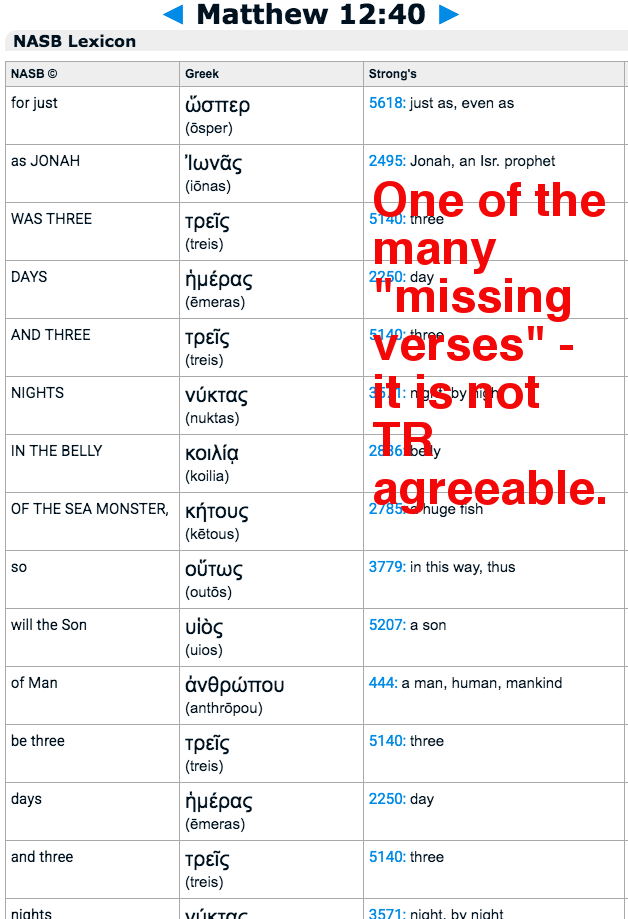
Matthew 12:40
NOTE: this is one of the MISSING VERSES
“For just as” - and “so will the son of man…” are the only true parts of that verse!! The ENTIRE “Johah was 3 days and 3 nights in the belly of the sea monster” - is TR CONTRADICTORY!!
Hebrews 8:8-12 - ALL missing verses!

The TR conflicting verses in Hebrews (NOTE: the ALL CAPS are the parts that do not gree in the TR)
Hebrews 1:5
For to which of the angels did He ever say, “YOU ARE MY SON, TODAY I HAVE BEGOTTEN YOU”? And again, “I WILL BE A FATHER TO HIM AND HE SHALL BE A SON TO ME”?
Hebrews 1:6
And when He again brings the firstborn into the world, He says, “AND LET ALL THE ANGELS OF GOD WORSHIP HIM.”
Hebrews 1:7
And of the angels He says, “WHO MAKES HIS ANGELS WINDS, AND HIS MINISTERS A FLAME OF FIRE.”
Hebrews 1:8
But of the Son He says, “YOUR THRONE, O GOD, IS FOREVER AND EVER, AND THE RIGHTEOUS SCEPTER IS THE SCEPTER OF HIS KINGDOM.
Hebrews 1:9
“YOU HAVE LOVED RIGHTEOUSNESS AND HATED LAWLESSNESS; THEREFORE GOD, YOUR GOD, HAS ANOINTED YOU WITH THE OIL OF GLADNESS ABOVE YOUR COMPANIONS.”
Hebrews 1:10
And, “YOU, LORD, IN THE BEGINNING LAID THE FOUNDATION OF THE EARTH, AND THE HEAVENS ARE THE WORKS OF YOUR HANDS;
Hebrews 1:11
THEY WILL PERISH, BUT YOU REMAIN; AND THEY ALL WILL BECOME OLD LIKE A GARMENT,
Hebrews 1:12
AND LIKE A MANTLE YOU WILL ROLL THEM UP; LIKE A GARMENT THEY WILL ALSO BE CHANGED. BUT YOU ARE THE SAME, AND YOUR YEARS WILL NOT COME TO AN END.”
Hebrews 1:13
But to which of the angels has He ever said, “SIT AT MY RIGHT HAND, UNTIL I MAKE YOUR ENEMIES A FOOTSTOOL FOR YOUR FEET”?
Hebrews 2:6
But one has testified somewhere, saying, “WHAT IS MAN, THAT YOU REMEMBER HIM? OR THE SON OF MAN, THAT YOU ARE CONCERNED ABOUT HIM?
Hebrews 2:7
“YOU HAVE MADE HIM FOR A LITTLE WHILE LOWER THAN THE ANGELS; YOU HAVE CROWNED HIM WITH GLORY AND HONOR, AND HAVE APPOINTED HIM OVER THE WORKS OF YOUR HANDS;
Hebrews 2:8
YOU HAVE PUT ALL THINGS IN SUBJECTION UNDER HIS FEET.”
Hebrews 2:12
saying, “I WILL PROCLAIM YOUR NAME TO MY BRETHREN, IN THE MIDST OF THE CONGREGATION I WILL SING YOUR PRAISE.”
Hebrews 2:13
And again, “I WILL PUT MY TRUST IN HIM.” And again, “BEHOLD, I AND THE CHILDREN WHOM GOD HAS GIVEN ME.”
Hebrews 3:7
Therefore, just as the Holy Spirit says, “TODAY IF YOU HEAR HIS VOICE,
Hebrews 3:8
DO NOT HARDEN YOUR HEARTS AS WHEN THEY PROVOKED ME, AS IN THE DAY OF TRIAL IN THE WILDERNESS,
Hebrews 3:9
WHERE YOUR FATHERS TRIED Me BY TESTING Me, AND SAW MY WORKS FOR FORTY YEARS.
Hebrews 3:10
“THEREFORE I WAS ANGRY WITH THIS GENERATION, AND SAID, ‘THEY ALWAYS GO ASTRAY IN THEIR HEART, AND THEY DID NOT KNOW MY WAYS’;
Hebrews 3:11
AS I SWORE IN MY WRATH, ‘THEY SHALL NOT ENTER MY REST.’”
Hebrews 3:15
while it is said, “TODAY IF YOU HEAR HIS VOICE, DO NOT HARDEN YOUR HEARTS, AS WHEN THEY PROVOKED ME.”
Hebrews 4:3
For we who have believed enter that rest, just as He has said, “AS I SWORE IN MY WRATH, THEY SHALL NOT ENTER MY REST,”
Hebrews 4:4
For He has said somewhere concerning the seventh day: “AND GOD RESTED ON THE SEVENTH DAY FROM ALL HIS WORKS”; 5and again in this passage, “THEY SHALL NOT ENTER MY REST.”
Hebrews 4:7
He again fixes a certain day, “Today,” saying through David after so long a time just as has been said before, “TODAY IF YOU HEAR HIS VOICE, DO NOT HARDEN YOUR HEARTS.”
Hebrews 5:5
So also Christ did not glorify Himself so as to become a high priest, but He who said to Him, “YOU ARE MY SON, TODAY I HAVE BEGOTTEN YOU”;
Hebrews 5:6
just as He says also in another passage, YOU ARE A PRIEST FOREVER ACCORDING TO THE ORDER OF MELCHIZEDEK.”
Hebrews 6:14
saying, “I WILL SURELY BLESS YOU AND I WILL SURELY MULTIPLY YOU.”
Hebrews 7:17
For it is attested of Him, “YOU ARE A PRIEST FOREVER ACCORDING TO THE ORDER OF MELCHIZEDEK.”
Hebrews 7:18
Hebrews 7:21
(for they indeed became priests without an oath, but He with an oath through the One who said to Him, “THE LORD HAS SWORN AND WILL NOT CHANGE HIS MIND, ‘YOU ARE A PRIEST FOREVER’”);
Hebrews 8:5
who serve a copy and shadow of the heavenly things, just as Moses was warned by God when he was about to erect the tabernacle; for, “SEE,” He says, “THAT YOU MAKE all things ACCORDING TO THE PATTERN WHICH WAS SHOWN YOU ON THE MOUNTAIN.”
Hebrews 8:8
For finding fault with them, He says, “BEHOLD, DAYS ARE COMING, SAYS THE LORD, WHEN I WILL EFFECT A NEW COVENANT WITH THE HOUSE OF ISRAEL AND WITH THE HOUSE OF JUDAH;
Hebrews 8:9
NOT LIKE THE COVENANT WHICH I MADE WITH THEIR FATHERS ON THE DAY WHEN I TOOK THEM BY THE HAND TO LEAD THEM OUT OF THE LAND OF EGYPT; FOR THEY DID NOT CONTINUE IN MY COVENANT, AND I DID NOT CARE FOR THEM, SAYS THE LORD.
Hebrews 8:10
FOR THIS IS THE COVENANT THAT I WILL MAKE WITH THE HOUSE OF ISRAEL AFTER THOSE DAYS, SAYS THE LORD: I WILL PUT MY LAWS INTO THEIR MINDS, AND I WILL WRITE THEM ON THEIR HEARTS. AND I WILL BE THEIR GOD, AND THEY SHALL BE MY PEOPLE.
Hebrews 8:11
AND THEY SHALL NOT TEACH EVERYONE HIS FELLOW CITIZEN, AND EVERYONE HIS BROTHER, SAYING, ‘KNOW THE LORD,’ FOR ALL WILL KNOW ME, FROM THE LEAST TO THE GREATEST OF THEM.
Hebrews 8:12
FOR I WILL BE MERCIFUL TO THEIR INIQUITIES, AND I WILL REMEMBER THEIR SINS NO MORE.”
Hebrews 9:20
saying, “THIS IS THE BLOOD OF THE COVENANT WHICH GOD COMMANDED YOU.”
Hebrews 10:5
SACRIFICE AND OFFERING YOU HAVE NOT DESIRED, BUT A BODY YOU HAVE PREPARED FOR ME
Hebrews 10:6
IN WHOLE BURNT OFFERINGS AND sacrifices FOR SIN YOU HAVE TAKEN NO PLEASURE.
Hebrews 10:7
THEN I SAID, ‘BEHOLD, I HAVE COME (IN THE SCROLL OF THE BOOK IT IS WRITTEN OF ME) TO DO YOUR WILL, O GOD.’”
Hebrews 10:8
SACRIFICES AND OFFERINGS AND WHOLE BURNT OFFERINGS AND sacrifices FOR SIN YOU HAVE NOT DESIRED, NOR HAVE YOU TAKEN PLEASURE in them” (which are offered according to the Law), 9then He said, “BEHOLD, I HAVE COME TO DO YOUR WILL.” He takes away the first in order to establish the second. 10By this will we have been sanctified through the offering of the body of Jesus Christ once for all.
Hebrews 10:12
SAT DOWN AT THE RIGHT HAND OF GOD
Hebrews 10:13
waiting from that time onward UNTIL HIS ENEMIES BE MADE A FOOTSTOOL FOR HIS FEET.
Hebrews 10:16
THIS IS THE COVENANT THAT I WILL MAKE WITH THEM AFTER THOSE DAYS, SAYS THE LORD: I WILL PUT MY LAWS UPON THEIR HEART, AND ON THEIR MIND I WILL WRITE THEM,” He then says,
Hebrews 10:17
AND THEIR SINS AND THEIR LAWLESS DEEDS I WILL REMEMBER NO MORE.
Hebrews 10:27
but a terrifying expectation of judgment and THE FURY OF A FIRE WHICH WILL CONSUME THE ADVERSARIES.
Hebrews 10:30
For we know Him who said, “VENGEANCE IS MINE, I WILL REPAY.” And again, “THE LORD WILL JUDGE HIS PEOPLE.”
Hebrews 10:37
FOR YET IN A VERY LITTLE WHILE, HE WHO IS COMING WILL COME, AND WILL NOT DELAY.
Hebrews 10:38
BUT MY RIGHTEOUS ONE SHALL LIVE BY FAITH; AND IF HE SHRINKS BACK, MY SOUL HAS NO PLEASURE IN HIM.
Hebrews 11:5
(KJV) "and was not found, because God had translated him"
(NASB) " AND HE WAS NOT FOUND BECAUSE GOD TOOK HIM UP;"
Hebrews 11:12
AS THE STARS OF HEAVEN IN NUMBER, AND INNUMERABLE AS THE SAND WHICH IS BY THE SEASHORE.
Hebrews 11:18
IN ISAAC YOUR DESCENDANTS SHALL BE CALLED.
Hebrews 13:5
I WILL NEVER DESERT YOU, NOR WILL I EVER FORSAKE YOU
Hebrews 13:6
THE LORD IS MY HELPER, I WILL NOT BE AFRAID. WHAT WILL MAN DO TO ME?
Hebrews 12:5
MY SON, DO NOT REGARD LIGHTLY THE DISCIPLINE OF THE LORD, NOR FAINT WHEN YOU ARE REPROVED BY HIM;
Hebrews 12:6
FOR THOSE WHOM THE LORD LOVES HE DISCIPLINES, AND HE SCOURGES EVERY SON WHOM HE RECEIVES.
Hebrews 12:20
IF EVEN A BEAST TOUCHES THE MOUNTAIN, IT WILL BE STONED.
Hebrews 12:21
I AM FULL OF FEAR
Hebrews 12:26
YET ONCE MORE I WILL SHAKE NOT ONLY THE EARTH, BUT ALSO THE HEAVEN.
Acts 2:17

1 Samuel 21:1
Waaaay too much to post graphacilly here, but here is the list:
ONLY 1 WORD:
בָּ֥א
ALL THE REST was added!!!
As was the entire end of 20:42
And ALL but 5 words of 21:2
The ENTIRE 21:3
And ALL but 3 words of 21:4
MOST of 21:5
And ALL but 4 words of 21:6
And ALL but 4 words of 21:7
The ENTIRE 21:8
And ALL but 4 words of 21:9
And ALL but 1 word of 21:10
And ALL but 4 words of 21:11
And ALL but 3 words of 21:12
The ENTIRE 21:13
The ENTIRE 21:14
NOTE:
Just to clarify something important:
Matthew 18:11 and John 5:4 were not “added by translators.” They are present in many Greek manuscripts (especially within the Byzantine tradition) and absent in some Egyptian manuscripts. Bible critics often omit them because they follow a different manuscript basis. Again, DIFFERING HUMAN OPINIONS - not "The concrete "word of God".
Early church writers quoted or referenced passages that Bible critics bracket or remove. That shows these readings were circulating very early, long before medieval translators. Here are 6 additional passages you may want to look into regarding early Christian usage:
Mark 16:9-20 - Quoted by Irenaeus in the Century 2 (Against Heresies 3.10.5).
Luke 22:43-44 - Referenced by early writers like Justin Martyr and Irenaeus.
John 7:53-8:11 - Discussed and cited by Ambrose and Augustine.
Acts 8:37 - Reflected in early baptismal confessions (Irenaeus, Cyprian).
Matthew 17:21 - Paralleled in early fasting traditions tied to Mark 9:29.
1 John 5:7 - The longer Trinitarian reading was discussed historically, though its manuscript support is later and debated.
The point isn’t that every manuscript contains every verse - but that many of these readings were known and used by Christians centuries before modern textual decisions were made. So the real issue isn’t “translators adding verses,” but which manuscript tradition later editors chose to prioritize. It’s always good to examine the evidence carefully.
1 Peter 4:7 (one of the missing verses!)
NOTE: Remember: all of the Disciples and Apostles "knew" - that His return would be easily within their lifetime.
“But the end of all things is at hand: be ye therefore sober, and watch unto prayer.”
Original Greek is: τέλος Πάντων ἤγγικεν οὖν σωφρονήσατε νήψατε προσευχάς
Literally meaning: "a toll/an end all/every to make near then/so be temperate to be self-controlled/vigilant/watchful to pray"
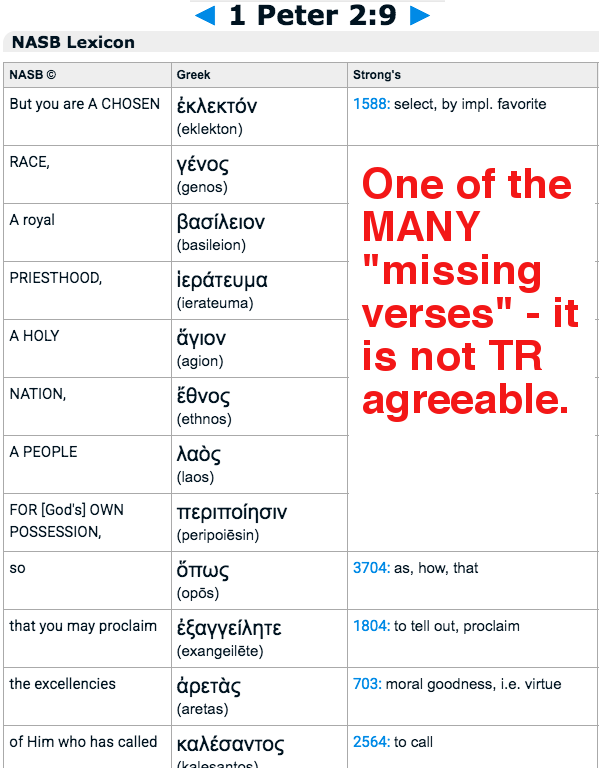
1 Peter 2:9
(KJV) "But ye are a chosen generation, a royal priesthood, an holy nation, a peculiar people; that ye should shew forth the praises of him who hath called you out of darkness into his marvellous light”
Greek: ἐκλεκτόν γένος βασίλειον ἱεράτευμα ἅγιον ἔθνος λαὸς περιποίησιν ὅπως ἐξαγγείλητε ἀρετὰς καλέσαντος σκότους θαυμαστὸν φῶς
Pronounced "eklekton genos basileion ierateuma agion ethnos laos peripoiēsin opōs exangeilēte aretas kalesantos skotous thaumaston phōs"
Literally means: “select genes/family/offspring royal a priesthood sacred/holy ethnic the people preservation as/how to tell out/proclaim moral goodness to call darkness wonderful light”
Romans 12:19 (A “Hidden verse”!!)
"Vengeance Is Mine says The Lord"
"Beloved, never avenge yourselves, but leave it to the wrath of God, for it is written, “Vengeance is mine, I will repay, says the Lord.”
Original Greek: μὴ ἐκδικοῦντες ἑαυτοὺς ἀγαπητοί δότε τόπον ὀργῇ γέγραπται
Then it is a HIDDEN VERSE: ἐκδίκησις ἀνταποδώσω - - - meaning "vindication to recompense"
Back to normal: λέγει κύριος
So, the entire "Vengeance is mine, I will repay” is CONTRADICTING TR!!
The rest of literally means: “not/that to vindicate/to avenge of one's self dearly loved to give a place impulse/anger/indignation/wrath to write to say supremacy/supreme in authority/controller/master"
VENGEANCE definition:
1. the act of killing, injuring, or harming someone because they have harmed you.
2. the punishing of someone for harming you or your friends or family, or the wish for such.
3. punishment inflicted in retaliation for an injury or offence: retribution.
So, if you even WISH for retribution (punishment) on someone, you have committed it, and it is for God, NOT for you. Feel guilty now?? And here you were -wanting MEN to feel guilty for ever LOOKING at another woman - and here YOU have done far worse (wished for harm or DEATH)! This "walk" is much harder than you thought, isn't it?
Here are more verses on "Vengeance is mine":
Deuteronomy 32:35
Vengeance is mine, and recompense, for the time when their foot shall slip; for the day of their calamity is at hand, and their doom comes swiftly.’
Original Hebrew: נָקָם֙ וְשִׁלֵּ֔ם לְעֵ֖ת רַגְלָ֑ם תָּמ֣וּט יֹ֣ום אֵידָ֔ם קָרֹוב֙ עֲתִדֹ֥ת וְחָ֖שׁ
Literally means “vengeance recompense time foot to totter/shake day distress/calamity near ready/prepared to make haste”
Hebrews 10:30
For we know him who said, “Vengeance is mine; I will repay.” And again, “The Lord will judge his people.”
Original Greek: THE ENTIRE VERSE IS “HIDDEN VERSES” - the TR convicts!!!
Psalm 94:1
O Lord, God of vengeance, O God of vengeance, shine forth!
Original Hebrew: יְהוָ֑ה אֵל־ נְקָמֹ֥ות אֵ֖ל נְקָמֹ֣ות הֹופִֽיַע׃
Literally means “Yahweh God vengeance God vengeance to shine out/send out beams”
S, “O” were added for “drama”.
Leviticus 19:18
"You shall not take vengeance or bear a grudge against the sons of your own people, but you shall love your neighbor as yourself: I am the Lord."
or in the KJV Shakespeare English:
"Thou shalt not avenge, nor bear any grudge against the children of thy people, but thou shalt love thy neighbour as thyself: I am the LORD."
Original Hebrew: תִקֹּ֤ם לֹֽא־ תִטֹּר֙ בְּנֵ֣י עַמֶּ֔ךָ וְאָֽהַבְתָּ֥ לְרֵעֲךָ֖ יְהוָֽה׃
Literally means “to avenge not son people to love [with your whole inner being, with every breath, with all you have. The prayer that called "V'ahavta" is actually the continuation of the Sh'ma.] friend/companion Yahweh” [_not_ "the Lord". "Yahweh means "the proper name of the God of Israel", - whereas "the Lord" denotes British monarchy - thanks to King James and his mis-translations.
So, the “or bear a grudge against” and " as yourself” were added.
Proverbs 20:22
Do not say, “I will repay evil”; wait for the Lord, and he will deliver you.
Original Hebrew: תֹּאמַ֥ר אֲשַׁלְּמָה־ רָ֑ע קַוֵּ֥ה לַֽ֝יהוָ֗ה וְיֹ֣שַֽׁע
Literally means “to say to be complete/sound evil/distress/misery to wait for Yahweh to deliver"
Of course, the pronouns “I” and “He” were added, as well as "do not”.
Ephesians 6:14

- Ephesians 4:25
- Ephesians 4:26
- Ephesians 5:31 - Yes, THE ENTIRE VERSE:
- Ephesians 6:2 The "honor your father and mother" is conflicting TR. The Greek that they chose actually means "to fix value on a father/parent mother"
- Ephesians 6:14 - most all of the entire verse!
Correct - the TR copies do NOT AGREE, so they just "guessed/summarized" this, and put it into "the infallible Word of God".
(not in the original, added to the bible, added to scripture, added verses, guessed text - for search)
Acts 2:17-18
This is one of the MISSING VERSES!! This, and Acts 2:18!
"In the last days I will pour out my spirit upon all flesh."
First of all, what does "pour out my spirit upon all flesh" mean? Next, assuming this word is indeed accurate, the Greek word is πνεύματος ("pneumatos") - meaning "wind/air/breath".
Yet "sarka" is indeed the word (again, assuming it is correct), and it means "flesh".
Acts 2:16
διὰ προφήτου Ἰωήλ
Means: "through/on account of a prophet [NOT "the" prophet] Ioel ("Yoel", not "Joel")"
Acts 2:17
ἐσχάταις ἡμέραις θεὸς, λέγει ἐκχέω πνεύματος πᾶσαν σάρκα υἱοὶ θυγατέρες προφητεύσουσιν νεανίσκοι ὁράσεις πρεσβύτεροι ἐνυπνιασθήσονται ἐνυπνίοις
Means: "last/extreme day God to say to bour out/bestow wind/breath all/every flush a son daughter to forthtell [NOT future!] a young man [yes, a MALE] the act of seeing/a vision/appearance a senior of either gender to dream a dream"
Acts 2:18
καὶ δούλους ἐκείναις ἡμέραις ἐκχεῶ πνεύματος προφητεύσουσιν
Means: "and/even/also a servant or hired slave that one/that thing day to pour out/bestow wind/breath to forthtell [NOT future!]"
How Do Translators Decide What Verses Appear in the NIV Translation?
On the surface, the missing verses from the NIV would appear to be a scandal. Did they intentionally leave out these verses in the NIV translation? Is there some conspiracy going on where people are trying to change the meaning of scripture? Thankfully, the answer is no, and the NIV is NOT "false doctrine"! When you dig beneath the surface (simply go to the original scrolls), you will recognize there really isn’t any controversy at all. To understand this, you must consider how the NIV translation came to be and why there are missing verses - primarily when compared to the KJV.
Every legitimate Bible translation relies on manuscripts for their translation. The NIV is no different. A manuscript is a handwritten copy of the Biblical texts. There are almost 6,000 Greek manuscripts of the New Testament. These manuscripts are all dated. Some are older, written closer to when the original author wrote the Biblical text. The differences you find, or “the missing verses,” are simply the result of using different manuscripts.
So, there is nothing nefarious going on with the NIV.
For example, the KJV used the Textus Receptus as the basis for its translation. This was one of the best resources available to the KJV translators in the early 1600s, which is when this work was done. When the work on the NIV began, they did not use the Textus Receptus. Other manuscripts were discovered long after the KJV was translated. These manuscripts were dated before the Textus Receptus. Most scholars have deemed these later discovered manuscripts more reliable, and they were used as the basis for the NIV translation. This in no way discredits the work of the KJV translators. It just helps to explain why one verse may appear in one translation and not another. Considering that there are 31,102 verses in the Bible, the fact only a few verses create discrepancies shows the opposite of what we expect. It shows how remarkably consistent and agreeable these translations really are.
As a further note, the translators of the NIV did not just leave verses out. They usually noted the differences with a footnote highlighting the comparison to other manuscripts. Again, this leads to further credibility and shows no intention of misleading the readers. You will also see these “missing” verses cause no doctrinal differences.
https://www.biblestudytools.com/bible-study/topical-studies/missing-bible-verses-niv.html
https://aboutpastors.com/list-of-missing-verses-in-the-bible/
https://zondervanacademic.com/blog/the-missing-17-verses-in-the-bible-mondays-with-mounce
https://www.bing.com/search?q=missing+verses+in+the+bible
Although I am slowly combining the many, MANY verses that do NOT agree with each other in the copies of the TR, here is my "starting collection":
Romans 2:6
-- Original Greek: ὃς Note: the rest of this entire verse has conflicting Textus Receptus copies, and was therefore deleted from some translations - with notes to that effect. It is _impossible_ to _accurately_ quote - when the original was in Aramaic, yet the TR had varying copies, so "which one is correct?"
But - - we'll go with whet the Translators chose to record: ἀποδώσει ἑκάστῳ κατὰ ἔργα
-- Literally means: "who/which/that (TR: to give up/give back/return/restore each/every down/against/according to work"
Romans 10:13
Exactly the same with this: there is nothing the same on all TR copies, but - they chose this:
πᾶς ἐπικαλέσηται ὄνομα κυρίου σωθήσεται
-- Literally means: "all/every to call upon a name/authority/cause master to save"
-- FYI - these are called "the missing verses" - if you want to look them up. Remember: you are reading a highly modified English translation - which is from a Latin translation (TR) - which is from Hebrew, or Koine Greek - which is from Aramaic speech.
Matthew 7:21
-- Original text: πᾶς λέγων κύριε κύριε εἰσελεύσεται βασιλείαν ουρανῶν ποιῶν θέλημα πατρός οὐρανοῖς
-- Literally means: " all to say master master to go in sovereignty heaven to make will a father heaven"
-- So, "Not everyone" was originally "all", "he who does" was "to make", and "will enter", and "in" - all added by translators.