"You are not to worship me, but God alone" (or "You are not to worship me, but only God")
Revelation 19:10
In Latin, the word for "Trinity" was Deus, meaning Jupiter, Juno and Minerva. Jerome also used Deum which means "In his Royal Triune Magnificence". Both words, Deum and Deus were used by Jerome when he rendered John 1:1 in his Latin Vulgate version of the New Testament.
John 17:3 - Jesus said his Father is the one true God. Jesus is
his son. Multiple passages say Jesus has a God over him.
John 5 and 6 Jesus says his Father gave him life. Therefore God
is not a Trinity - but "a Triunen":
3 in 1 (like the oil); constituting "a trinity in unity", as the
Godhead.
To put it simply, Triune refers to the concept of something being
three-in-one, like a 3-headed dog or a triple-layered cheesecake
(yum!), while Trinity refers exclusively
to the Christian belief in the 3 persons of God. To put it simply,
"Triune" refers to the concept of something being 3-in-1, like a
three-headed dog or a triple-layered cheesecake (yum!), while "Trinity"
refers exclusively to the Christian belief in the 3 persons of God - having 3
components that are both separate and united. Hence why it's
impossible to understand/grasp.
The Holy Spirit, (the "Holy Ghost"), is a concept within
the Abrahamic religions. In Judaism, the Holy Spirit is understood as
the divine quality or force of God manifesting in the world,
particularly in acts of prophecy, creation and guidance.
It wasn’t until hundreds of years after the death of Jesus (in Century
4) - and many different interpretations of scripture - that we see the
Holy Spirit formally defined as a co-equal and co-eternal "person"
within the Trinity. The Trinitarian doctrine of the Holy Spirit as a distinct "person"
which shares, from the beginning of existence, the same substance with
the Father and the Son was proposed by Tertullian (160-225 AD) and
established through the Councils of Nicea (325) and [Council of]
Constantinople (381).
In mainstream Trinitarian Christianity, the Holy Spirit or Holy Ghost
(Greek: Ἅγιο Πνεῦμα, or the Latin: Spiritus Sanctus) is #3 Person of
the Trinity, which is often enumerated as "God the Father, God the Son,
and God the Holy Spirit". Nontrinitarian Christians (like
me), who reject the doctrine of the Trinity, differ significantly from
mainstream Christianity in their beliefs about the Holy Spirit. In
Christian theology, pneumatology is the study of the Holy Spirit. Due
to Christianity's historical relationship with Judaism, theologians
often identify the Holy Spirit with the concept of the Ruach Hakodesh
in Jewish scripture, on the theory that Jesus was expanding upon these
Jewish concepts. Similar names, and ideas, include the Ruach Elohim
(Spirit of God) and Ruach YHWH (Spirit of Yahweh). In the New
Testament, the Holy Spirit is identified with the Spirit of Christ, the
Spirit of Truth, and the Paraclete (helper).
Just
like the words omniscient, omnipotent,
and omnipresent - - "trinity"
is not in the Bible - like “Jesus loves you”, or "the rapture"
is
not, or "holy". There
is
no
human way to explain "the trinity", and trying to - reduces God's
infinite power - to us. We cannot comprehend it, and we were not
meant to.
The thief on the cross
- did Yeshua reply "today you will see me in
paradise - - if you believe in the trinity, and accept that we are 3
separate beings, yet are only one.”
Latin:"Trinitas" does not mean "3" -
it means
"triad" (from "trinus" -
meaning "threefold"). A "triad" means 1 god with 3 heads. Christians
believe in 1 God - but 3 different people. Humans are incapable of
understanding this logic (it's logically _impossible_ ), so "faith" is
what must be the center piece. In detail with Latin below...
- Unity (or Monity) - Espoused by the
Unitarians, who reject the consubstantiiation of God and hold that He is
strictly a single person. Jesus is regarded by Unitarians as a prophet
who is not a part of the godhead.
- Binity - Advocated by the
Binitarians, who believe in the co-divinity of Jesus the Son and God
the Father. What I find particularly interesting about them is that
they believe Jesus was fully divine and co-eternal prior to becoming
human, but that he fully surrendered his divinity while in human form,
only to regain it in resurrection. This differs from the standard
mainstream trinitarian view that Jesus the man was both divine and
human. So to make it really confusing, the Binitarians treat Jesus as a
unity at all times, while the trinitarians see his human form as a
binity.
- Trinity - The orthodox mainline Christian theology of the coexistent, coeternal three in one: Father, Son and Holy Ghost.
- Quadrinity - all over the Internet and apparently in several countries.
- Quintinity - If the Pope ever did pronounce the 5-fold nature of God, I expect the word would continue to be based on the Latin root
- Infinitarian - If the godhead has constituent parts, it's some unquantifiable number in one. An infinity.
So, as to the standand "Trinity":
Many attribute:
Erasmus and Martin Luther refused to add 1John 5:7-8 "father son ghost"
- an admitted insertion by church fathers. Only after an obscure
passage in Mathew was "found" in one Koine Greek version, did Erasmus
insert it. Luther refused to add this Catholic insertion in
his first German translation of the Christian bibles, but it was added
in after Luther died.
1 John 5:7
(KJV) "For there are three that bear record in heaven, the Father, the Word, and the Holy Ghost: and these three are one."
The Greek: τρεῖς μαρτυροῦντες
Means "3 to bear witness/testify"
So, "record in heaven, the Father, the Word, and the Holy Ghost: and these three are one." were ALL ADDED!!!!
1 John 5:8
(KJV) "And there are three that bear witness in earth, the spirit, and the water, and the blood: and these three agree in one."
The Greek: πνεῦμα ὕδωρ αἷμα τρεῖς ἕν
Means "wind/breath/air
water blood
3 1"
So, "And there are three that bear witness in earth" was added (!!!!),
as well as "spirit, and the [water], and the [blood]: [and these] three
[agree in] one. So MOST was added!!!
Matthew 28:19
"baptize them in the name of the Father and of the Son and of the Holy
Spirit."
Original Koine Greek: βαπτίζοντες ὄνομα πατρὸς υἱοῦ ἁγίου πνεύματος
Pronounced "baptizontes onoma patros uiou
agiou pneuma"
Literally means: "to dip/sink a
name [NOT “the
name”] a father [NOT “the
Father”] a
son separate wind/breath”
But, if this IS their "proof of the trinity", it’s only recorded ONCE, and
this is as “clear" as it gets???
Revelation 1:1
"This is the revelation of Jesus Christ, which God gave Him to show His
servants what must soon come to pass. He made it known by sending His
angel to His servant John,"
The Greek: Ἀποκάλυψις Ἰησοῦ Χριστοῦ ἣν θεὸς ἔδωκεν δεῖξαι δούλοις
ἃ δεῖ τάχει γενέσθαι ἀποστείλας ἐσήμανεν ἀγγέλου δούλῷ Ἰωάννῃ
It correctly translates to: "an
uncovering/disclosure
Yeshua The Messiah
who/which/that God to
give/grant/bestow/commit/deliver to show/to
point out/to make known a servant (paid or
unpaid/volunteer)
who/which/that should/it is
necessary/must
speed/swiftness/quickness to come into being/to
happen to send/to dispatch/set at
liberty to signify/indicate/make
known a messenger a
servant (paid or unpaid/volunteer) iōannē
/"Yo-hann" ("John")
So, "This is the" was added, as well as "Him", "He", and "His", and
"angel" is actually "messenger". There is no "His son" there, as
many Christians claim.
Another
example:
Genesis 1:26
(KJV) "Then God said, 'Let us make mankind in our image, in our
likeness, ..."
Sorry - there is no "us" in the original
Hebrew - the KJV added
"us" ... as well
as "our", and "my". Here is the original Hebrew:
אֱלֹהִ֔ים וַיֹּ֣אמֶר נַֽעֲשֶׂ֥ה אָדָ֛ם בְּצַלְמֵ֖נוּ
Pronounced "
eˇloˇhim vaiˇyoˇme
naˇ'aˇseh aˇdam
beˇtzalˇmeˇnu"
It
means literally: "God to
say
do/make a man (yes, a
MAN/MALE) an image"
The rest reads "similitude to
have dominion", but gets
translated
as
"According to our likeness and let them
rule." All of the other has been *added* .
In Hebrew, "adam" means "man". In Greek, "anthropos" means
human. You may recognize that from "anthropology" - the study
of males? No - the study of humans .
Also see the horrible translation
of
Genesis 1:1
Most Christians operate under a false belief that the Trinity is
"Father, Son, and Holy Bible", and that "it’s difficult to get the same
fruit as the early Church when we value a book they didn’t have - more
than the Holy Spirit they did have" (Johnson, Bill and Beni, Walking
in the Supernatural: Another Cup of Spiritual Java, ch. 26, "Read
to Have a God Encounter," Destiny Image Pub., 2012).
https://www.gotquestions.org/Bethel-Church-Redding.html
Video on the Trinity
https://youtu.be/OBVfFE7tif0?si=bZEUC0P2j3eBIpSz
(The trinity is not in the Bible, words not in the bible, phases
not in the bible, for search)
A "trinity" is not a "Triad". Pagans
had triads
of gods,
but not a trinity, as Christians, Muslims, and Hindus, do
(Brahma, Vishnu and Shiva). The Hindu triad is called
"Trimurti". Then there are the 3 gods of
Mesopotamia, many centuries before Christ: Anu, Enlil and Ea.
Some might claim that the pagan Greek goddess "Hecate" is a Trinity but
that error is dealt with in this external web link: http://soloontherocks.tumblr.com/post/65357485016/the-greek-deity-hekate-is-not-a-triple-goddess
A trinity is one Being of God - subsisting as 3 persons, not 3 separate
gods. It's impossible to figure out the Trinity -
there is the "egg" metaphor, and there is the "water" one. I like
the "water" one: there is ice, water, and steam. All 3 are the same
water, but in different states (persons).
Some call this "model" (MODE-uhl), and many modal
believers say God is
one intity, but presents in the 3 ways. Some point to the Baptism
of Yeshua by John the Baptizer (literal translation), and say "God
changed his hats pretty fast!" My reply to that is:
1) God is NOT a "he".
God ("G_d" by
modern Messianic Jews
like me) is
"The Creator", not reduced to a gender.
God has no
sex organs.
*I*
refer to God as "Adoni"
(the Hebrew word for
"trinity": one
entity). But usually, "Elohim" (it's the Hebrew word from the
original scrolls - meaning "God the
Creator"). Although
this word _is_ masculine in Hebrew, and in Greek, "God"
and "gods" were all feminine gender(s)!!
https://theconversation.com/what-the-early-church-thought-about-gods-gender-100077
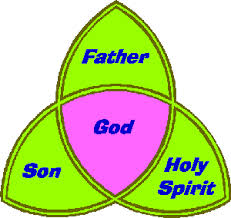 (for search: God's
gender, the gender
of God, God has no gender, God is not a he, God is not a "he")
(for search: God's
gender, the gender
of God, God has no gender, God is not a he, God is not a "he")
Remember: "i" is plural in Geek. An example: 1
cactus; 2 cacti.
So,
God is not a man - NOT a "he, He, him, or Him". Note on
"masculine" - "the moon" is a feminine word. So are:
Meetings
They
Jerusalem
Truth
Sing
Land
People/Nation
2) God is omnipent - God can be at billions [google-plex] of
places at once.
3) Saying "he changed his hat" is actually "reducing" God to our
understanding, not the all-powerful, limitless entity that Elohim
(God) is!
4) Read my section on judging.
Although the word "trinity" is not in The Bible, the REFERENCE to it
is. And "holy" is not in the
Bible! I
think that adds a whole new dimention (of understanding) to the
trinity (τριάδα - pronounged "triáda"). In Hebrew: The Holy
Trinity - הַשִּׁלּוּשׁ הַקָּדוׄשׁ
pronounced "ka•dosh". Although the Jewish faith (I am not a
Hicidic Jew - I am a Messianic Jew) has no reference to this concept,
the Hebrew language recognizes the Trinity respectfully.
But if any human "understands" it - no, they don't. Ha ha.
Trinity - Latin
Early Century 13: "trinite", "union of 3 persons (the Father, Son and
Holy Spirit) in Godhead (also "God head" [just below]); doctrine of a
threefold personality
constituting 1 God" in prevailing Christian doctrine, from Old French "trinite" ("the Holy Trinity",
Century 11), from
Late Latin "trinitatem" (nominative "trinitas") "Trinity, triad" (Tertullian),
from Latin trinus "threefold, triple," from plural of trini "3 at a
time, threefold," related to tres (neuter tria) "three". The
meaning "state of having 3 parts, threeness" is from late Century
14, also "a threesome, a triad."
This idea is used to explain that 3 distinct divine persons - God the
Father, God the Son Jesus Christ, and God the Holy Spirit - are of the
same essence (homoousion), share the same qualities, and are therefore
One God. Each person in the Trinity has the same qualities as God
because they are each fully God; no other member is less God than the
other. Because God is uncreated and has always existed, this also
applies to them.
Before the idea was made dogma at the First Council of Nicaea,
there
were also other ideas about the nature of God. These included:
• God adopted Jesus during his baptism (known as
Adoptionism).
• That Jesus wasn't a human at all; his human form
was nothing but an illusion (Docetism).
• They are 3 distinct gods who worked as a team to
form one Godhead (Tritheism).
• The Father, Son, and Holy Spirit are not 3
distinct persons but are only different names for the same being (God),
and each is a manifestation of God (Modalism).
• God the Father is the only person of the Trinity
who is fully God; the Son and Holy Spirit weren't fully God, and they
had a beginning (Subordinationism).
• God the Father is the only true God; the Son had a
beginning, so he wasn't God; and the Holy Spirit is not a person
(Arianism).
Where the word Trinity is from the English word "Trinity" comes from
Latin "Trinitas", meaning "the number three". This abstract noun is
formed from the adjective trinus (three each, threefold, triple), the
word unitas is the abstract noun formed from unus (one).
The corresponding word in Greek is "Τριάς" (Trias), meaning "a set of
3" or "the number 3."
See my main "Trinity" section.
God head (or Godhead)
The dictionary definition of "god head" is "divine nature or essence",
- so, the word "Godhead" simply means "Divinity," "Deity," or "divine
nature", and many claim it means "the Trinity" .... Godhead is a Middle
English variant of the word "godhood". But - let's see the original,
since the word "trinity " is nowhere in the Bible at all. Nor is "Jesus
loves you" verbatim.
Acts 17:29
The Greek word is θεῖον (pronounced "theion"),
and roughly means "divine/godly".
Romans 1:20
The Greek word is θειότης (pronounced
"theiotēs"), and roughly means "divinity/divine nature".
Colossians 2:9
The Greek word is θεότης (pronounced ""),
and roughly means "deity".
Many do NOT believe in the Trinity:
However, roughly 25 years ago that all changed. A
scholar named Larry Hurtado wrote a groundbreaking book called One God,
One Lord which radically reversed the scholarly consensus. He
showed that, as early as we can trace, even prior to the writing of the
first New Testament books, the very first Jewish Christians were
already worshiping Jesus as God. For example, in Philippians 2:6-11 Paul is borrowing from an early
Christian hymn that scholars believe was used in the earliest
Palestinian Jewish churches’ worship. The hymn proclaims that at
Jesus’ name "every knee will bow" and "every tongue confess that Jesus
Christ is Lord to the glory of God the Father." This is a direct
allusion to Isaiah 45:23 where YHWH insists that before Him alone every
knee will bow and every tongue confess that He alone is Lord.
Clearly, in this hymn of praise to Christ, Jesus is being worshipped
alongside the Father as the One True God. There could be no
higher or more explicit way for a First-Century Jew to express Jesus’
divinity. Now, the scholarly consensus holds that Jesus was worshipped as God
virtually right from the beginning, very soon after His death on the
Cross.
But what about the Holy Spirit? Where did He, and hence the
Trinity, come in? Hurtado’s work only shows that there are Two
Persons in the Godhead, not Three. So when did belief in the Holy
Spirit as the Third Divine Person develop? In these earliest New Testament documents, the distinct personality and
divinity of the Spirit is simply presumed. As early as we can
trace, the Church viewed the Holy Spirit as a separate Person within
the divine identity. (N.T. Wright, Paul and the Faithfulness of
God: Part II, Minneapolis, MN: Fortress Press, 2013, pp. 709-728)
In the Old Testament, the Holy Spirit is simply portrayed as God’s
spirit - the imminent presence of Yahweh upon the earth.
1
Corinthians 12:1-13. In verse 11, Paul talks about the Spirit
giving different spiritual gifts as He chooses, to whomever He
wills. What’s most remarkable about this passage, though, is that
Paul is
making a completely separate point—which has nothing to do with who the
Spirit is! He’s trying persuade the Corinthians that no one
spiritual gift is greater than another; each is equally vital.
Some in Corinth were causing divisions because they had developed a
spiritual elitism that privileged certain gifts—and, therefore,
people—over others. This is what Paul is addressing. "There
are different gifts, but the same Spirit. There are different
ministries, but the same Lord. There are different works, but the
same God…"(vs. 4-6) As is widely recognized among scholars, God,
Lord, and Spirit are the equivalent of Father, Son, and Holy
Spirit. In a matter of fact, purely reflexive way, Paul mentions
the Spirit alongside the Father and Son in a position of complete
equality. Looking for a way to convince the Corinthians to all
just get along, he exhorts them to mirror the plurality and unity that
he can just presume they all know the Three Divine Persons enjoy!
The Trinity was not invented at Nicea. It wasn’t invented by Generation 2 or 3 Christians. It wasn’t invented by the
writers of the New Testament. No, the Trinity, at least
incipiently, is so thoroughly woven into the earliest writings of the
New Testament that it seems to have been part of the early church’s
belief right from the beginning.
https://raisingjesus.com/blog/163-who-invented-the-trinity
The current mainstream teaching in Christianity is that God is a
coequal, coeternal, one-substance trinity, and that Jesus Christ is
God. This doctrine is considered by many as the cornerstone of
Christianity, but where did this doctrine come from?
The historical record is overwhelming that the church of the first
three centuries did not worship God as a coequal, coeternal,
consubstantial, one-substance three in one mysterious godhead. The
early church worshipped one God and believed in a subordinate Son. The
trinity originated with Babylon, and was passed on to most of the
world's religions. This polytheistic (believing in more than one god)
trinitarianism was intertwined with Greek religion and philosophy and
slowly worked its way into Christian thought and creeds some 300 years
after Christ. The idea of "God the Son" is Babylonian paganism and
mythology that was grafted into Christianity. Worshipping "God the Son"
is idolatry, and idolatry is Biblically condemned; it breaks the first
great commandment of God of not having any gods before him (Exodus
20:3).
The Bible clearly refers to Jesus Christ as the Son of God 50 times; it
never refers to him as God the Son. The phrase, Son of God, is in the
genitive case; showing that Jesus Christ originated from and belongs to
God. In no way can the Son of God be the same as God the Son, that
violates grammar, language and common sense. God the Son is not a
biblical term, it does not appear in the Greek, Hebrew, or Aramaic
texts. God the Son is however a Babylonian term. The Babylonians made
Nimrod a god, and when he died they deified his son Tammuz as God the
Son. Making God a man and man a god was invented in Babylon. This
idolatry and false belief
https://www.reddit.com/r/DebateReligion/comments/n6tnmt/the_concept_of_trinity_originated_years_after/
The 3 monotheistic religions -- Judaism, Christianity and Islam --
all profess to share one fundamental concept: belief in Allah as the
Supreme Being, the Creator and Sustainer of the Universe. Known as
Tawheed (monotheism) in Islam, this concept of the Oneness of God was
stressed by Moosaa (Moses), may Allah exalt his mention, in a Biblical
passage known as the "Shema" or the Jewish creed of faith: "Hear, O
Israel: The Lord our God is one Lord." [Deuteronomy 6:4]
In Matthew 28:19, we find "baptizing them in the name of the Father,
and of the Son, and of the Holy Ghost" is quite clearly an addition to
Biblical text -- that is, not the actual words of Jesus. The only
other reference in the Bible to a Trinity can be found in the Epistle
of I John 5:7, Biblical scholars of today, however, have admitted that
the phrase "...there are three that bear record in heaven, the Father,
the Word, and the Holy Ghost: and these three are one" is definitely a
"later addition" to Biblical text, and it is not found in any of
today's versions of the Bible.
Was the Trinity discovered, or invented, by the early church? I
remember a heated discussion at primary school about the distinction
between "discover" and "invent." A hapless boy had stood up in front of
the class and stated that Alexander Graham Bell discovered the
telephone. Everyone laughed and the ensuing discussion was replete with
bizarre images of Bell sailing the world and coming across a primitive
telephone on a desert island. To "discover" implies encountering and
recognising the significance of something already in existence which
had until that point been unknown, obscure or unrecognised, such as
microbes or Neptune or the Great South Land. "Invention," on the other
hand, involves creating or fabricating something new, either from
scratch or as an adaptation of something already in existence, such as
steam engines, aeroplanes or the internet. So it is correct to say that
Bell invented the telephone, but did not discover it. However,
invention relies on discovery. If the physical nature of sound and the
principles of its propagation, as well as the physics of electricity
had not been discovered, then the telephone could not have been
invented. What Bell discovered was that these physical principles could
be manipulated in such a way as to convey voice electrically across
vast distances, and in developing the apparatus to do so he invented
telephony.
Non-trinitarians have regarded the Trinity as an invention of the early
church, citing the fact that the word "Trinity" doesn’t appear in
Scripture. (In fact, the word Trinitas was, as far as we know, first
coined by Tertullian c.200AD). This construct, they maintain, was
further elaborated on in an increasing divergence from Scripture,
culminating in the complexities of the Athanasian creed in the late
fifth or early sixth century.
It is true that Tertullian used the term Trinitas to encapsulate the
church’s understanding of the Godhead. But it was hardly a new concept.
It can be demonstrated that from the earliest extra-New Testament
extant writings, the church held to both the divinity of Christ and the
one-ness of the Godhead, and embraced Father, Son and Holy Spirit as
divine. (For example, see my earlier blog on Ignatius). This is because
they recognised these doctrines within the Scriptures themselves and as
preached by the Apostles, with whom these earliest writers were
contemporary. Just as Thomas called Jesus "My Lord and my God," so did
the first and second century apostolic fathers and the second and third
century apologists and polemicists. The challenge was finding the
concise vocabulary and thought framework to express their understanding
of the infinite God.
On the one hand, monotheism (the doctrine that there is one unique God)
was defended vigorously against polytheism (the idea that there are
many gods). This the Christians held in common with the Jews, whose
belief in the inspired Hebrew Scriptures they shared. "God is one" was,
and still is, a foundational Christian claim; the Creator God is unique
and alone is worthy of worship.
On the other hand, the early Christians believed the teachings of the
New Testament concerning the divinity and pre-existence of Christ, in
whom God had made himself fully known, and the pouring out of the
divine and personal Holy Spirit upon the church. The unity of God
somehow encompasses the Lordship of Jesus, his role as Creator and his
worthiness to be worshipped, and the way the Paraclete or Holy Spirit
is embraced with Father and Son. The Father, the Son and the Holy
Spirit are each portrayed in divine terms; in particular the Son shares
the divine attributes, names, prerogatives, works and honours of the
Father. The Spirit acts as God in creation and redemption and is spoken
of interchangeably with "God," possesses attributes of and performs
functions of God and of Christ, is described in personal terms and
grouped with the Father and the Son.
On face value, these statements might appear mutually contradictory and
so they have been misconstrued by non-trinitarians, erroneously
thinking that God is one in exactly the same sense in which he is
three. Clearly, this would be a contradiction, and an impossibility. As
Paul Fiddes (Participating in God: London: Darton, Longman & Todd,
2000, 4–5) puts it, "the doctrine of the Trinity is not an exercise in
mathematics, it is not a numerical puzzle designed to test faith or
baffle the human mind, stating the paradox that God is one being and
three beings at the same time, or one person and three persons." To
help with this distinction, Tertullian used the Latin words "three
persons," "one substance."
Several inadequate models have been advanced to reconcile the
three-ness and one-ness of God. By the late second century the heresy
of modalism had taken root in the western church. This came in various
forms but essentially taught that the one God manifested himself in
different "modes" of being on different occasions, sometimes as Father,
sometimes as Son and sometimes as Holy Spirit. Tertullian was
especially outspoken against this in his work Against Praxeas, showing
that whilst God is a Monarchy or unity, Father, Son and Spirit are
distinct persons.
If the full deity of the Son and Holy Spirit are denied, making the
Father the only true God, then the richness of biblical teaching on the
divinity of the Son and Holy Spirit must be ignored. We will fail to
honor the Son as we do the Father, and fail to ascribe him due worship.
This was the error of Ebionism, Arianism (modern Jehovah’s Witnesses),
Subordinationism, Socinianism (modern Christadelphians) and the various
forms of Unitarianism. The full deity of Father, Son and Holy Spirit
could also be accommodated by denying there is one God; this would be
tritheism, which non-trinitarians have falsely accused Trinitarians of
upholding. Tritheism has not been a common error and is certainly not
what mainstream Christians understand by the doctrine of the Trinity.
Tertullian lived and wrote before the days of Arianism and whilst he
defended the deity of Christ in opposition to Judaisers, his main
contentions were with polytheists (denying there is only one God) and
with modalists (blurring the distinctions between Father, Son and
Spirit). In his defence of apostolic doctrine he used the word
Trinitas. The word is an invention, yes, but it is an articulation of
the doctrine believed by Christians in continuity with Apostolic
teaching, the discovery of truth as revealed by the Spirit to the
writers of Scripture (John 16:11; Heb 1:1–2; 1 Pet 1:10–12). The word
itself is not the doctrine, any more than the name "telephone" fully
encapsulates the underlying technological principles, but depends upon
and demonstrates them. The following is a brief taste of Tertullian’s
understanding of the triune God. He cites and paraphrases Scripture
without our modern convention of chapter and verse; I have added some
verses in support of his contentions.
Tertullian’s Trinitas assumes the oneness of God:
"The object of our worship is the One God (Deut 6:4–5/Matt 22:37–40),
He who by his commanding word, his arranging wisdom, his mighty power,
brought forth from nothing this entire mass of our world… (Prov 3:19;
John 1:1–2) The eye cannot see him, though he is spiritually visible
(John 1:18). He is incomprehensible, though in grace he is manifested…
there is one God only who made all things, who formed man from the dust
of the ground… (Isa 43:11–13, 44:6, 45:5; Ezek 39:25; Rom 3:30; Jas
2:19) (Tertullian Apology XX)
Tertullian’s Trinitas encompasses the Son and the Spirit, sent forth
from God:
"There is one only God, but under the following dispensation, or
oikonomia, as it is called, that this one only God also has a Son (John
3:16–18), His Word, who proceeded from himself (John 8:42), by whom all
things were made, and without whom nothing was made (John 1:3; Col
1:16–17). Him we believe to have been sent by the Father into the
Virgin (Luke 1:34–35; Gal 4:4), and to have been born of her — being
both Man and God (Heb 1 & 2), the Son of Man and the Son of God
(Mark 14:61–62), and to have been called by the name of Jesus Christ….
who sent also from heaven from the Father (14:16, 26; John 15:26,
20:22), according to his own promise, the Holy Spirit the Paraclete ,
the sanctifier of the faith of those who believe in the Father, and in
the Son, and in the Holy Spirit (1 Pet 1:2). That this rule of faith
has come down to us from the beginning of the gospel… will be apparent."
(Tertullian, Against Praxeas II)
Tertullian’s Trinitas preserves the distinction between Father, Son and
Spirit:
"The Father and the Son are two separate Persons, not only by the
mention of their separate names as Father and the Son, but also by the
fact that he also who delivered up the kingdom, and he to whom it is
delivered up (1 Cor 15:27–28) — and in like manner, he who subjected
all things and he to whom they were subjected — must necessarily be two
different Beings. (Against Praxeas IV)
"Now the Spirit indeed is third from God and the Son; just as the fruit
of the tree is third from the root, or as the stream out of the river
is third from the fountain, or as the apex of the ray is third from the
sun. Nothing, however, is alien from that original source whence it
derives its own properties (John 14:16–20). In like manner, the
Trinity, flowing down from the Father through intertwined and connected
steps, does not at all disturb the Monarchy (unity of God), whilst at
the same time guards the state of the Economy (God’s revelation of
himself)." (Against Praxeas VIII)
Tertullian’s Trinitas does not split God into three Gods:
"Two beings are God, the Father and the Son and with the addition of
the Holy Spirit even three, according to the principle of the divine
economy, which introduces number, in order that the Father may not… be
himself believed to have been born and to have suffered… That there
are, however, two Gods or two Lords is a statement which at no time
proceeds out of our mouth (1 Cor 8:5–6): not as if it were untrue that
the Father is God (John 8:54; Eph 4:6), and the Son is God (John 20:28;
Heb 1:3, 8, 10), and the Holy Spirit is God (Acts 5:3–4; 1 Cor 3:16–17,
6:19–20), and each is God… (Matt 28:19) (Against Praxeas XIII)
Thus the connection of the Father in the Son, and of the Son in the
Paraclete, produces three coherent Persons, who are yet distinct one
from another. These three are one in essence, not person, as it is
said, "I and my Father are one", in respect of unity of substance not
singularity of number. (Against Praxeas XXV)
Tertullian (or one of his contemporaries) invented the word "Trinity,"
but he didn’t invent the doctrine. Rather he enunciated it succinctly
and defended it as a truth already discovered but under challenge from
pagans and modalists. The doctrine is demonstrably continuous from the
New Testament through the early decades of the church’s writings, tying
together the foundational principles that there is one unique God, and
that Father, Son and Spirit, each divine, constitute this tri-unity. No
other model, construct or concept can do justice to these principles
and so succinctly and appropriately describe the wonderful divine Being
we worship. The invented name is not what matters, but what it
represents — the discovery of the inner life of God himself through
eternity, the God who is relationship.
"The grace of the Lord Jesus Christ and the love of God and the
fellowship of the Holy Spirit be with you all." (2Cor 13:14)
https://ruthiesutcliffeblog.wordpress.com/2015/07/15/so-who-invented-the-trinity/
Divine Simplicity
The philosophical doctrine of Divine Simplicity originates in Greek
philosophy, and was adopted by Thomas Aquinas. However, the problem of
Divine Simplicity is just that, in that it reduces God to an
abstraction, and ultimately a logical impossibility. If God is
completely necessary and entirely simple, then the act of creation is
identical to God himself.
Thus, creation can have no contingency if the act of creating the
universe is identical to the essence of God himself. Along with God's sovereign
freedom to create or not create, we also lose human free will, which
believers love to blast anyone that questions Christian theology with.
The Seven Spirits
Isaiah 11 talks about the 7 spirits. They are not _literal_ spirits,
but rather aspects of God that will ultimately be present in
the person of Yeshua ("Jesus").
When you look at Isaiah 11, it seems that these "seven spirits"
("ROO-ach", breath, mind, spirit) are not literal spirits, but rather
aspects of God that will ultimately be present in the person of
Jesus. The spirits of God are symbolically represented by a
7-headed candlestick that stood before His presence in the wilderness
tabernacle (later the temple in Jerusalem, see Numbers 8:1 - 2).
The seven Spirits of God (Greek: τα ἑπτά πνεύματα του θεού, ta heptá
pneúmata tou theoú) are mentioned 4 times in Revelation, and fully in
Isaiah:
The Hebrew word in Isaiah 11 - is ר֣וּחַ (pronounced "roo-akh") - which
means "breath/wind", not "spirit". In Revelation, the Greek word here
is "pneuma", which means "air/wind/breath" - it's where we get
"pneumatic" (air tools) from.
The Isaiah ones are:
-- The Spirit of the Lord (יְהוָ֑ה means "Yahweh",
not "Lord". "Lord"
is British monarchy, and it diminished (extinguishes!) the true meaning
of "Yahweh". How *dare* King James do that .... but he _was_ a Dictator
- a homosexual, slave driver one)
-- The Spirit of wisdom
-- The Spirit of understanding
-- The Spirit of counsel
-- The Spirit of might
-- The Spirit of knowledge
-- The Spirit of the Fear of the Lord (Yahweh)
Many attribute Revelation 1:4 for this:
"The seven spirits are named again in Jesus’s message to Sardi"
Ἰωάννης ἑπτὰ ἐκκλησίαις Ἀσίᾳ χάρις
εἰρήνη
ἐρχόμενος ἑπτὰ πνεύματων ἃ
ἐνώπιον θρόνου
"iōannēs 7 an assembly/congregation Asia, a Roman
province kindness/charity/grace [unknown
word] to come or go 7
wind/breath who/which/that in sight
of/facing/before seat of esteem/a stately seat/throne"
Revelation only mentions ἑπτὰ πνεύματων - which means "7 wind/breath".
Also, all pronouns (Him, He, etc) were never in the original - they
_all_ were added by Translators.
So, that list _actually, literally_ means:
-- breath of Yahweh (God. יְהוָ֑ה means "Yahweh", not
"Lord")
-- breath of skill/wit/wisdom (not "wisdom")
-- breath of knowledge/perfect understanding/wisdom
-- breath of advice/advisement/counsellor/purpose
The next word is וּגְבוּרָ֔ה meaning "force/mastery/might/mighty
act/power"
-- breath of cunning/ignorantly/knowledge/wittingly
-- breath of reverence/exceedingly fearfulness of Yahweh
Hey - that's 6, not 7! Unless you ADD the "force/mastery" as another.
On-line "theologians" explain it this way:
6 of the 7 gifts that will rest or abide in Christ are obvious in verse
2. They are given in 3 sets of 2 each. They are wisdom and
understanding (both related to the intellect and discernment), counsel
and might (both practical in nature), plus knowledge and the fear of
the Eternal (which relates to the relationship with the Father).
The last of the 7, also recorded in Isaiah 11:2, is easily overlooked.
It is the spirit of God (Jehovah),
which is
found at the beginning
of the verse and which makes everything possible.
What’s striking about these 7 attributes is that they align closely
with what theologians later interpret as the "Sevenfold Spirit of God"
mentioned in Revelation. Isaiah’s list isn’t flashy. It’s not draped in
the heavy apocalyptic symbolism you get in Revelation, with its horns
and eyes. It’s much more down-to-earth, practical even. This is a
snapshot of how the Spirit of God operates in the real world,
specifically in the life and ministry of Jesus—the Messiah Isaiah was
pointing to.
Now, let’s break it down a bit. When Isaiah talks about the Spirit of
God, he’s referring to the overarching, all-encompassing presence
of God’s Spirit. This is the Spirit that anoints, empowers, and gives
life. It’s big, it’s broad, and it’s everywhere. But what about the
other six? These are the specific ways this Spirit shows up in
real-time - in human life, in action. Think of them as different
expressions of God’s Spirit working through people, particularly
through Jesus.
Wisdom, for instance, is the ability to make godly decisions, while
understanding gives insight into the deeper meaning of things. Counsel,
is that divine guidance we all crave when we’re stuck and mighty?
That’s God’s power, the force that moves things forward when everything
seems immovable. Knowledge goes beyond just facts—it’s an intimate
awareness of God’s ways. And then there’s the fear of God - not fear
like terror, but reverence, the kind of awe that draws you toward God
instead of pushing you away.
When you look at Isaiah’s list through this lens, it becomes clear:
these aren’t just random characteristics. They’re a blueprint for how
God’s Spirit interacts with the world, specifically through Christ.
It’s almost like Isaiah is giving us a behind-the-scenes look at the
way God’s Spirit would later shape the life of Jesus. And that’s what
ties it all back to the Seven Spirits of God mentioned in Revelation.
Different books, different styles, same Spirit of God meaning - just
expressed through a different lens.
What Isaiah gives us is a kind of practical theology, something we can
see reflected in the real-life actions of Jesus. Revelation, on the
other hand, pulls us into this cosmic, almost mythic vision of God’s
Spirit—a Sevenfold Spirit of God, complete and perfect, spanning all of
creation. But the heart of it? That’s the same. Whether in the Old
Testament or the apocalyptic imagery of Revelation, it’s all about how
God’s Spirit works, manifests, and makes His presence known in both the
heavens and on earth. But let’s also take an in-depth look at this
concept as it appears in the Revelation.
And here is the original Hebrew:
Isaiah 11:1 And there shall come forth a rod out of the stem of Jesse,
and a Branch shall grow out of his roots:
חֹ֖טֶר וְיָצָ֥א מִגֵּ֣זַע יִשָׁ֑י וְנֵ֖צֶר מִשָּׁרָשָׁ֥יו יִפְרֶֽה׃
This literally means "a twig or rod to go or come
out stem/stock/to cut down
(trees) yiˇshai ("Jesse") a
sprout/shoot a root to bear
fruit/be fruitful/flourish"
Isaiah 11:2 And the spirit of the LORD shall rest upon him, the spirit
of wisdom and understanding, the spirit of counsel and might, the
spirit of knowledge and of the fear of the
LORD;
ר֣וּחַ יְהוָ֑ה וְנָחָ֥ה ר֧וּחַ חָכְמָ֣ה וּבִינָ֗ה ר֤וּחַ עֵצָה֙
וּגְבוּרָ֔ה ר֥וּחַ דַּ֖עַת וְיִרְאַ֥ת יְהוָֽה׃
This literally means "breath/wind
Yahweh cease/settle down/cause to
rest breath/wind
skill/wit/wisdom knowledge/perfect
understanding/wisdom breath/wind
advice/advisement/counsellor/purpose
force/mastery/might/mighty act/power
breath/wind
cunning/ignorantly/knowledge/wittingly
reverence/exceedingly fearfulness Yahweh"
2 Spirit - the "Rainbow" gender
This is all NOT to be confused with "2 spirit" - the "Rainbow" gender
that they have added.
This term actually came from "year 3 annual inter-tribal Native
American first nations gay and lesbians Americans conference" in 1990.
Mia Leramy coined the term in a dream in 1990. The Oh-gee-wee nation
has translated the term into English.
"a contemporary pan-Indian umbrella term used by some Indigenous North
Americans to describe Native people who fulfill a traditional
third-gender (or other gender-variant) social role in their
communities. 2 Spirit signifies "bisexual", but it really has no
meaning.
Coined in 1990 as a primarily ceremonial term promoting community
recognition, in recent years more individuals have taken to
self-identifying as two-spirit. Two-spirit, as a term and concept, is
neither used nor accepted universally in Native American cultures.
Indigenous cultures that have traditional roles for
gender-nonconforming people have names in their own Indigenous
languages for these people and the roles they fill in their
communities."
Kwanza
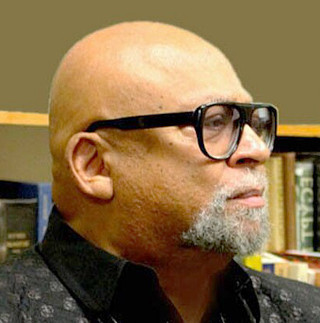 Blacks celebrate
"Kwanza", but it's a made-up holiday
- by San Francisco felon racist fag - "Dr." Maulana Karenga (birth
name: Ronald McKinley Everett)
Blacks celebrate
"Kwanza", but it's a made-up holiday
- by San Francisco felon racist fag - "Dr." Maulana Karenga (birth
name: Ronald McKinley Everett)
created Kwanzaa in 1966 during the Black Freedom Movement.
Born
Ronald McKinley Everett, he changed his name to "sound more
African".
In 1971, Karenga _was sentenced to 1 to 10 years in prison_
on counts
of felony assault and false imprisonment. A May 14, 1971 article in the
Los Angeles Times described the testimony of one of the women:
Deborah Jones, who once was given the Swahili title of an African
queen, said she and Gail Davis were whipped with an electrical cord and
beaten with a karate baton after being ordered to remove their clothes.
She testified that a hot soldering iron was placed in Miss Davis' mouth
and placed against Miss Davis' face and that one of her own big toes
was tightened in a vise. Karenga also put detergent and running hoses
in their mouths, she said. They also were hit on the heads with
toasters. Jones and Brenda Karenga testified that Karenga
believed the
women were conspiring to poison him, which Davis has attributed to a
combination of ongoing police pressure and _his own drug
abuse_ .
Karenga denied it, of course. He was imprisoned at the California Men's
Colony, where he studied and wrote on feminism, Pan-Africanism, and
other subjects. (Yeah, REAL HARD time!) The US Organization
fell into
disarray during his absence and was disbanded in 1974. After he
petitioned several black State
officials to support his parole on fair sentencing grounds, it was
granted in 1975. After his parole, Karenga re-established the US
Organization under a new structure.
He was awarded (honorary!) his first PhD in leadership and human
behavior in 1976 from United States International University (later
merged into Alliant International University) for a dissertation titled
"Afro-American Nationalism: Social Strategy and Struggle for
Community". In 1977, he formulated a set of principles called Kawaida,
a Swahili term for normal. Karenga called on African-Americans to adopt
his secular humanism and reject other practices as
mythical. (meaning
he was son only a HUGE racist, but also a Narcissist - and a liar)
In 1994, he was awarded (honorary!) a second PhD in social ethics from
the University of Southern California for a dissertation titled "Maat,
the moral ideal in ancient Egypt: A study in classical African ethics."
In 1995, he sat on the organizing committee and authored the mission
statement of the Million Man March. (meaning he is a
sexist, as well
as a racist, narcissist, and liar)
Karenga delivered a eulogy at the 2001 funeral service of New Black
Panther Party leader Khalid Abdul Muhammad, praising him for his
organizing activities and commitment to black empowerment. As of
2023,
Karenga chairs the Africana Studies Department at California State
University, Long Beach.
CSU Long Beach - loves felon drug abuser racist narcissist liars.
Same
with Greta - she has about 10 PhDs by now - all honorary, and she has
broken more laws than she can count.